

How Much Electricity Does a Home Lift Use in India? Monthly Running Costs and Energy-Saving Tips for Indian Homeowners

Written By: Aziz Acar
Category: Home Lift
Updated: 15 Jun, 2026

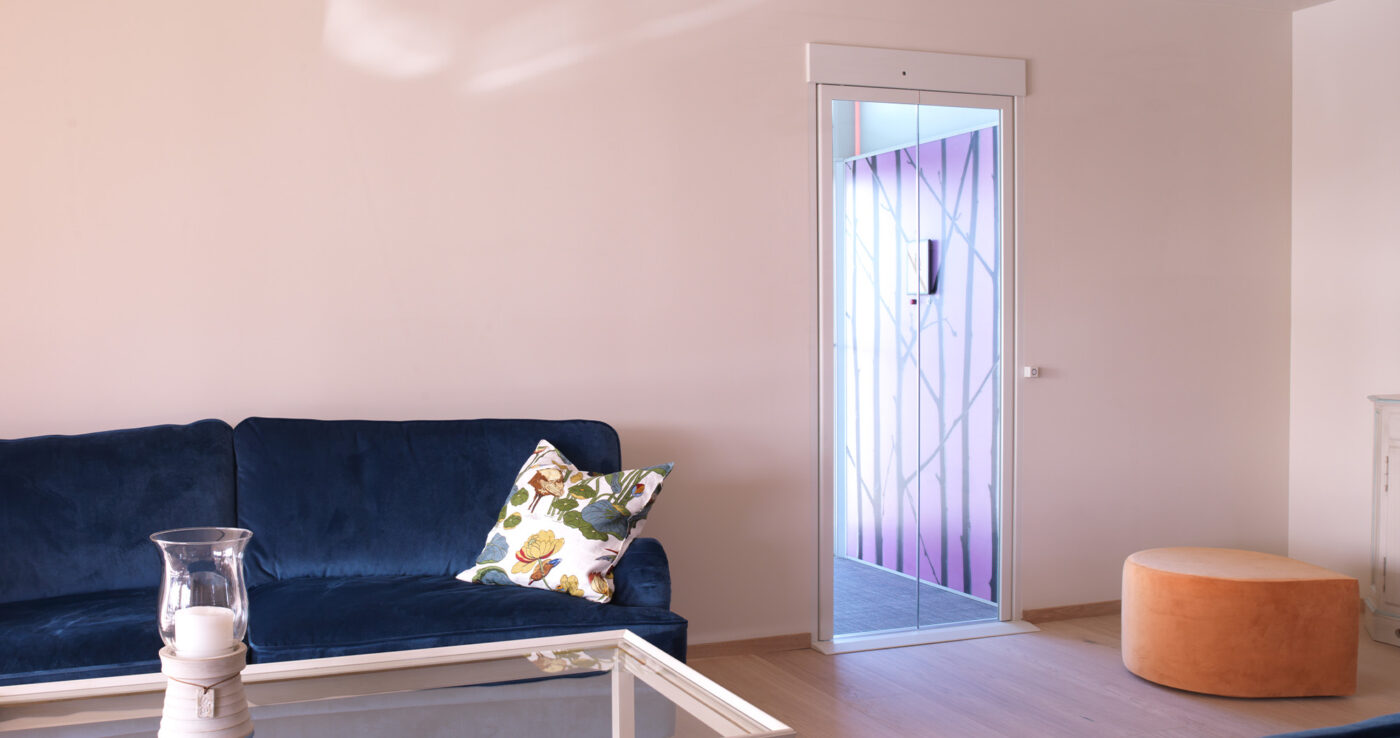
Home Lift Use in India showing energy-efficient residential lift operation and electricity consumption in a modern Indian home

Before you install a home lift, one question almost always comes up towards the end of the conversation: “What will this add to my electricity bill every month?”

It is a completely fair question. Indian homeowners are already managing significant monthly power bills, air conditioning alone can push a household into a higher DISCOM slab, and once you are in that upper slab, every additional unit of consumption costs more. So understanding exactly how much electricity a home lift draws, and how that translates into rupees on your bill, is something worth working out before you sign anything.

The good news is that a well-specified home lift, installed in the right way, adds far less to your monthly electricity consumption than most people assume. The bad news is that not all lift technologies are equal on this front, and some older or cheaper systems can genuinely be a recurring expense you did not plan for.

Here is a straightforward breakdown of what you actually need to know.

How Elevator Electricity Consumption Is Calculated

The basic formula is simple. Every appliance’s electricity consumption is measured in kilowatt-hours (kWh), and one kWh is what you see listed as “one unit” on your electricity bill. For a home lift:

Units per trip = (Motor power in kW) × (Time per trip in hours)

For a standard home lift with a 0.9 kW motor covering one floor in roughly 30 seconds, a single trip consumes approximately 0.0075 kWh (about 7.5 watt-hours). That is a very small number on its own.

Now multiply it by realistic daily usage.

A typical Indian household with a home lift, say, an elderly parent, two adults, and household help using the lift through the day, makes somewhere between 3 and 8 trips per day across all users. Let us work through both ends of that range:

Light use (3 trips/day, 30 days): 0.0075 kWh × 3 × 30 = approximately 0.68 kWh per month

Moderate use (6 trips/day, 30 days): 0.0075 kWh × 6 × 30 = approximately 1.35 kWh per month

Heavier use (8 trips/day, 30 days): 0.0075 kWh × 8 × 30 = approximately 1.8 kWh per month

These are remarkably small consumption figures. Even at heavy daily use, the lift itself adds only 1.8 units per month to your meter reading, before accounting for the significant energy savings that battery-regenerative technology provides (more on that shortly).

What This Costs in Rupees: State-Wise Reality Check

India does not have a single electricity tariff. Every state has its own DISCOM structure, and rates vary enormously. What matters for your lift bill is not just the per-unit rate but which slab your total household consumption falls into, because Indian tariffs are progressive; once you cross into a higher slab, you pay the elevated rate on all units in that band. For families considering a lift for elderly at home, understanding these electricity costs can help estimate the long-term running expenses and choose a more energy-efficient lift solution.

For 2025-26, here is a practical snapshot of residential tariff ranges across key cities:

Delhi (BSES/TPDDL): ₹3.00 per unit for the first 200 units, rising to ₹6.50 per unit for the 401-800 unit band, and ₹8.00 per unit beyond 800 units.

Maharashtra (MSEDCL): Starting around ₹3.46 per unit for the first 100 units, moving up to ₹6.21 per unit for 101-300 units. Mumbai consumers on Tata Power or Adani Electricity see different structures.

Karnataka (BESCOM): Progressive slab structure starting around ₹3.60 per unit, with upper slabs touching ₹5.90 per unit for consumption above 400 units.

National average: Approximately ₹7.20 per unit when you factor in fuel surcharge adjustments and the higher slabs that most upper-middle-class households with ACs and home appliances fall into.

So what does the lift actually add to your bill? Even taking the national upper-slab average of ₹7-8 per unit:

1.8 units per month × ₹8 per unit = ₹14 to ₹15 per month.

Read that again. A modern, well-engineered home lift running at fairly heavy usage in an Indian household adds roughly the cost of one cup of coffee to your monthly electricity bill.

Even if you use a more conservative estimate of ₹6 per unit and moderate usage, you are looking at ₹8 to ₹10 per month. This is simply not a meaningful operating cost for any household that can invest ₹19 to 22 lakh in a quality home lift.

Comparing Lift Technologies: Who Consumes What

Not all lifts are this efficient. The technology you choose has a significant bearing on your monthly running costs, and this is worth understanding before making a purchase decision. For example, a Hydraulic Home Lift typically consumes more electricity than modern battery-driven or screw-driven alternatives because it relies on a hydraulic pump system during operation. Understanding these differences can help homeowners select a lift that balances performance, comfort, and long-term energy efficiency.

Hydraulic lifts are one of the more common types in older Indian installations. They use a hydraulic pump and piston system. Motor sizes typically range from 3 kW to 7.5 kW, and the motor runs continuously during travel, including while holding position. Monthly consumption for a hydraulic home lift at moderate use can easily reach 15 to 40 units. At ₹7 per unit, that is ₹105 to ₹280 per month, and that is before the quarterly oil top-up costs and the higher AMC bills that come with hydraulic systems.

Traditional traction lifts (electric motor with counterweight) are more efficient than hydraulic, typically using 2 kW to 4 kW motors. Monthly consumption at moderate use falls in the 8 to 20 unit range, costing ₹56 to ₹140 per month. These are better suited to taller buildings (5+ floors) and are oversized for a typical 2-4 floor bungalow.

Pneumatic (vacuum) lifts are quiet and visually striking, but the continuous vacuum pump required for operation draws meaningful standby power. Monthly consumption can rival or exceed hydraulic systems in some configurations.

Battery-driven screw lifts represent the current best-in-class for residential energy efficiency. SWIFT’s EcoDrive system, for example, runs a 0.9 kW motor on battery power. The motor only draws from the grid to charge the batteries, and crucially, the system regenerates energy when the lift travels downward, meaning every downward trip charges the battery rather than consuming from the grid. SWIFT estimates that approximately every 4th trip is effectively free because of this regeneration. Monthly consumption in the range described above, 1 to 2 units, is genuinely achievable with this technology.

The table below gives a practical comparison for a G+3 installation at 6 trips per day:

Lift Type Motor Power Monthly Units (est.) Monthly Cost (at ₹7/unit)
Hydraulic 4-7.5 kW 20-40 units ₹140-280
Traction (electric) 2-4 kW 10-20 units ₹70-140
Battery-driven screw 0.9 kW 1-2 units ₹7-14

The difference is not marginal. Over 10 years, the energy cost difference between a hydraulic and a battery-driven lift at current tariffs can comfortably add up to ₹25,000 to ₹30,000 — not counting future tariff hikes, which have been consistent across every Indian state in recent years.

Standby Power: The Hidden Cost Nobody Talks About

Here is something most lift vendors will not proactively tell you. Every home lift draws some power even when it is not moving, this is called standby consumption. The control panel, door sensors, lighting inside the cabin, and the motor’s holding circuits all draw a trickle of power, often 24 hours a day.

For older hydraulic or traction systems, standby draw can be 30 to 80 watts continuously. That adds up:

60W standby × 24 hours × 30 days = 43.2 kWh per month just sitting idle.

At ₹7 per unit, that is an additional ₹302 per month in standby consumption alone. Over a year, ₹3,600 simply for the lift being plugged in and not being used.

Battery-driven systems with modern control electronics typically have much lower standby draws, often 5 to 10 watts. At 10W standby, the same calculation gives 7.2 kWh per month, or about ₹50 per month.

Before purchasing any home lift, ask the vendor for the certified standby power rating in watts. This should be in the product specification sheet. If a vendor cannot provide this number, that tells you something.

Does a Battery-Driven Lift Actually Save Money in Indian Conditions?

Yes, and not just on your electricity bill.

The battery advantage in India is not primarily about energy savings on paper, though those savings are real. The larger benefit is operational continuity. India’s power situation, even in metros, is not consistently reliable. Voltage fluctuations damage electronics, and scheduled or unscheduled outages can occur. In a standard traction or hydraulic lift, a power cut means the lift stops, making the emergency bell suddenly very important. This is one reason homeowners comparing options such as a battery-driven lift and evaluating the vacuum lift price in India should look beyond the initial purchase cost and consider how each technology performs during power interruptions and day-to-day operation.

A lift running on its own battery system continues to operate normally during a power cut. SWIFT’s EcoDrive batteries maintain full functionality through outages, and the system’s dynamic charging means the batteries are always being topped up during normal downward travel. For a 70-year-old parent using the lift independently in a G+3 bungalow while the rest of the family is out, this is not a nice-to-have feature. It is the feature.

From a pure bill standpoint, the regenerative charging means your effective consumption is lower than the motor’s rated draw suggests. In practice, households report that their electricity bill increase after installing a SWIFT lift is barely perceptible, often within the monthly variation they already see from seasonal AC usage.

Can Solar Panels Run a Home Lift in India?

This comes up more frequently now, particularly among homeowners in Rajasthan, Gujarat, Maharashtra, and other high-solar-irradiance states who already have rooftop solar systems.

The short answer: yes, it is practical, and battery-driven lifts are the best candidates for solar integration.

A 1 kW rooftop solar panel generates approximately 4 to 5 units of electricity per day in most Indian locations. Given that a home lift at moderate use consumes roughly 1.5 to 2 units per month in total, a rooftop solar system, even a small one already installed for other household purposes, generates more than enough surplus to cover the lift’s consumption many times over.

If you are on net metering and your solar system already exports surplus power to the grid, your home lift’s consumption is functionally covered by that credit. From a billing perspective, the lift runs almost free, making it an attractive option for energy-conscious homeowners. This combination of solar power and an efficient home lift is increasingly being considered in premium residential developments such as projects-the-norwegian-villa, where sustainability, convenience, and long-term operating efficiency are important design priorities.

For homeowners without solar but planning to add it, the lift’s minimal consumption means it does not add any meaningful sizing requirement to your solar installation. A 2 kW system sized for other loads comfortably covers the lift as well.

One practical note: direct solar-to-lift connectivity, bypassing the grid, requires that your lift’s battery system is compatible with solar charge input. Discuss this specifically with your installer if you want to pursue an off-grid or hybrid arrangement.

Energy-Saving Tips for Home Lift Owners in India

A few practical habits that cost nothing and extend equipment life:

Turn off the cabin light when the lift is not in use. LED cabin lights draw only 5 to 10 watts, but it is good practice and helps reduce heat inside the cabin. Whether you have a lift in a villa, bungalow, or a home lift for apartment India installation, adopting simple energy-saving habits like this can help minimize standby power consumption and improve overall efficiency over the long term.

Schedule service regularly. A well-lubricated screw-and-nut drive runs more efficiently than one with degraded lubrication. Annual AMC visits should include a drive efficiency check.

Avoid repeated short trips in quick succession. If you are going up to fetch something and coming straight back down, it is more efficient to make one round trip than two one-way trips. This is more relevant for hydraulic systems where the pump has a warm-up cycle, but it is good practice regardless.

Check that door sensors are aligned. Misaligned sensors cause false door-open detections, which can trigger repeated motor attempts. If your lift hesitates before moving, ask your service team to check door sensor calibration.

Frequently Asked Questions

How much electricity does a home lift use per month in India?

A modern battery-driven screw lift at 6 trips per day will typically consume 1 to 2 units (kWh) per month from the grid, factoring in regenerative charging from downward travel. Traditional hydraulic lifts can consume 20 to 40 units per month for the same usage pattern. Standby draw adds to this number for all lift types — ask your vendor for the certified standby wattage before buying.

Which type of home lift is most energy-efficient for Indian homeowners?

Battery-driven screw lifts are the most energy-efficient option for residential use in India, for two reasons. First, the motor is smaller (typically 0.9 kW versus 3 to 7 kW for hydraulic). Second, regenerative charging during downward travel reduces net grid consumption. Combined with low standby draw, this type of lift adds the least to your monthly electricity bill.

What is the approximate monthly electricity cost for a home lift in India in rupees?

For a battery-driven lift at moderate use (6 trips per day) and current Indian tariff rates of ₹6 to ₹8 per unit in the upper residential slabs, monthly grid electricity cost works out to approximately ₹8 to ₹15 per month. For a hydraulic lift at the same usage, expect ₹140 to ₹280 per month plus standby consumption charges. The difference over a 10-year ownership period is substantial.

Does a battery-powered home lift cost less to run than a standard electric lift?

Yes, significantly. The combination of a smaller motor, regenerative downward charging, and lower standby consumption means a battery-powered lift draws a fraction of the grid power that a comparable hydraulic or traction lift requires. For Indian homeowners in the upper tariff slabs, this difference in running cost is real and cumulative over the life of the product.

Can solar panels power a home lift in India and is it practical?

Yes, it is practical. A home lift at typical residential usage consumes only 1 to 2 units of electricity per month. Even a small 1 kW rooftop solar system generates 120 to 150 units per month, meaning the lift’s consumption is easily covered by existing solar surplus. If you are on net metering, your lift effectively runs on credits your solar system already earns. Battery-driven lifts are the best fit for solar integration because they already operate on a DC battery system internally.