

How does an elevator work? An elevator moves people or goods between floors using a motor, pulley system, and counterweight that work together to lift and lower the cabin safely and efficiently. The elevator working principle is based on balancing the weight of the elevator car with a counterweight, reducing the energy needed for movement. Modern elevators also use advanced control systems, safety brakes, and sensors to ensure smooth operation. In this guide, you’ll learn how elevators work, the key components involved, and the technology that keeps them running safely.
This blog has been written by the SWIFT Lifts expert team and reviewed by John Löwbäck, a home lift specialist with extensive technical expertise and a strong focus on innovation in residential mobility solutions.
Key Highlights
- Modern elevators use motors, guide rails, and intelligent control systems to move safely between floors.
- Safety features such as brakes, sensors, and emergency backup systems ensure smooth and reliable operation.
- Home lifts use different drive technologies, including screw-driven, traction, hydraulic, and vacuum systems, depending on the application.
How Does an Elevator Work? Step-by-Step
- The user presses the lift call button.
- The control system receives the request.
- The motor or hydraulic system activates.
- The lift car moves inside the shaft.
- Sensors monitor speed, position, and safety.
- The elevator stops at the selected floor.
- The doors open automatically for passengers.
The Basics of Elevator Working Principle
The key feature of the overall elevator operation is coordinating the various parts of the lift to carry passengers or cargo vertically from one floor to the other inside a building. At its core, an elevator operates on the principle of counterbalance, utilizing a motor-driven system to raise and lower a carrier within a shaft.
If you opt for the floor, the system activates and sends commands through the controller to the motor. This triggers the motor, which rotates the sheave. The sheave, in turn, winds or unwinds the cables, causing the lift to rise or descend accordingly. The counterweight moves in the opposite direction, ensuring balance and optimizing energy usage. For a screw-driven lift like SWIFT, the principle is the same although no winding/unwinding of cables or counterweights are needed. The electrical motor rotates a drive nut, making the drive screw turn, which makes the lift go up or down.
What are the Fundamental Components of An Elevator?
To comprehend how a lift works, it’s essential to delve into its mechanical components to have a fair idea of the lift operation:
Motor
The motor, the heart of the elevator, makes the lift move, which is the carrier where people ride. This motor, typically electric, receives signals from the control system based on the chosen floor. Depending on the direction of movement (up or down), the motor rotates, transferring energy to the next crucial component.
The Pulley System
The elevator system, comprised of a sheave (a wheel with a groove) and cables, changes the circular motion of the motor into the lift. The sheave is at the top of the elevator lift shaft and connected to the engine with a drive shaft. The sheave also rotates while the motor turns, thus helping unwind the cables. These robust cables, made of steel for strength and flexibility, are connected to the lift at one end and the counterweight at the other.
For SWIFT nothing of this is needed. The motor, drive nut, and the drive screw are all built into the moving carrier, making the whole solution extremely space efficient.
The Counterweight
The regulator that can easily be overseen is a significant part of the elevator’s operation. It is considered a heavyweight that moves in reverse the lift through the shaft. Its weight is carefully calculated to balance the lift’s and passengers’ weight. This ingenious design reduces the motor’s energy to move the lift, as the counterweight helps offset some of the lifted weight.
For a screw- and nut driven lift like SWIFT, no counterweights are needed.
Safety Brakes
Ensuring passenger safety is paramount, and elevators incorporate robust safety features. One crucial element is the safety brake. This braking system automatically engages if the lift experiences a sudden stop or a loss of power. The brakes typically clamp down on rails within the shaft, preventing the lift from falling and ensuring passenger safety. As SWIFT follows the European safety standard EN81-41, we use a double brake system to ensure complete peace of mind.
Elevator Technology Comparison: Screw-Driven vs Hydraulic vs Traction vs Vacuum
| Feature | Screw-Driven Lift | Hydraulic Lift | Traction Lift | Vacuum Lift |
|---|---|---|---|---|
| Working Principle | Motor rotates a threaded screw to move the cabin | Hydraulic piston pushes the cabin up using fluid pressure | Motor moves ropes and counterweights to raise and lower the cabin | Air pressure differences move the cabin between floors |
| Machine Room Required | No | Usually Yes | Sometimes (MRL options available) | No |
| Space Requirement | Compact | Requires space for hydraulic equipment | Moderate | Very Compact |
| Energy Efficiency | High | Moderate | High | Moderate |
| Maintenance | Low | Moderate to High | Moderate | Low |
| Ride Quality | Smooth and quiet | Smooth | Very smooth and fast | Smooth |
| Maximum Travel Height | Low to Medium-rise homes | Low to Medium-rise homes | Medium to High-rise buildings | Low-rise homes |
| Installation Complexity | Simple | Moderate | Moderate to Complex | Simple |
| Best For | Residential homes with limited space | Homes requiring high lifting capacity | Multi-storey homes and commercial buildings | Compact homes and retrofit projects |
| Safety Features | Self-locking screw mechanism, battery backup | Emergency lowering systems | Advanced braking and safety controls | Automatic air-pressure safety systems |
Which Elevator Technology Is Best?
The best elevator technology depends on your home’s space, budget, travel requirements, and maintenance preferences. Screw-driven lifts are popular for residential applications because they offer compact installation, energy efficiency, and low maintenance. Hydraulic lifts are suitable for heavier loads, traction lifts are ideal for taller buildings, and vacuum lifts work well in homes with limited installation space.
Types of Elevators
Hydraulic Lifts
Hydraulic lifts apply incompressible fluids such as oil as a power transfer medium to move the elevator cabin. Here’s a breakdown of their key features:
Working Principle:
A hydraulic pump pumps pressurized oil into the cylinder at the elevator’s bottom, driving through the shaft.
Benefits
- More straightforward design: Easier to install and maintain compared to traction lifts.
- Smoother operation: Offers a quieter and more comfortable ride experience.
- Space-efficient: A smaller machine room is required due to the absence of overhead machinery.
Traction Lifts
These ubiquitous workhorses dominate the landscape of high-rise buildings. Traction lifts utilize a pulley system and counterweight to move the cabin. Here’s a closer look:
Working Principle:
A motor drives a grooved wheel (sheave) at the shaft’s top. Steel cables wrapped around the sheave are connected to the lift, and the counterweight moves the cabin up and down as the sheave rotates.
Benefits
- High-rise capability: This can be used in buildings of all heights, making them ideal for skyscrapers.
- Faster speeds can achieve higher speeds than hydraulic lifts, especially for taller buildings.
- Greater weight capacity: Can accommodate heavier loads, making them suitable for commercial applications.
Screw-Driven Lifts
Screw-driven lifts are a type of elevator that uses a drive screw and nut mechanism for movement, instead of the hydraulics or traction drives commonly found in other elevator systems.
Working Principal:
These lifts utilize a long threaded screw and a nut mechanism. The motor rotates the nut, causing the lift carrier to move smoothly up or down the screw.
Benefits
- Space-Saving Design: They require minimal additional construction compared to other lift types. There’s no need for a separate machine room as the motor is often integrated into the lift structure.
- Silent Operation: The screw-driven mechanism operates quietly, which is ideal for noise-sensitive environments like residences.
- Easy Installation: Their simpler design allows quicker and less disruptive installation than hydraulic options.
Main Components of an Elevator
Understanding the main components of an elevator makes it easier to see how the system moves safely and efficiently between floors. While elevator designs vary, most modern elevators include the following essential parts:
| Component | Function |
|---|---|
| Motor | Provides the power needed to move the elevator cabin up and down. |
| Controller | Acts as the elevator’s brain, processing floor requests and managing movement, speed, and safety functions. |
| Guide Rails | Metal tracks that guide the elevator cabin and keep it stable during travel. |
| Elevator Cabin | The enclosed space that carries passengers or goods between floors. |
| Counterweight | Balances the weight of the elevator cabin, reducing energy consumption and improving efficiency. |
| Doors | Allow passengers to enter and exit safely while preventing access when the elevator is moving. |
| Safety System | Includes emergency brakes, sensors, door interlocks, and backup systems that protect passengers during operation. |
How These Components Work Together
When a user selects a floor, the controller sends instructions to the motor. The motor moves the elevator cabin along the guide rails, while the counterweight helps balance the load and reduce the power required. Throughout the journey, the doors, sensors, and safety systems continuously monitor the elevator to ensure smooth and secure operation.
How Much Energy Does An Elevator Consume?
Elevators could also be highly efficient compared to people climbing the same number of stairs. The power consumption in an elevator depends on its kind, size, and frequency of use. On average, elevators in commercial or residential buildings consume only 2% to 10% of the energy consumed. The elevator’s energy use is driven mainly by its motor and lighting equipment. Constant repairs and regular maintenance can optimize an elevator system’s performance.
SWIFT has developed a unique Tesla-inspired battery system that charges dynamically as the lift goes downwards. In this way, every 4th trip is free making it very energy efficient.
Technological Advancements in Elevator Systems
Residential lifts that used to symbolize luxury only are gradually gaining their way into modern, sophisticated homes. They add up to numerous advantages, which include not only accessibility and convenience but also creating a whole experience of your property at a much higher level.
Advanced Security Features
Safety is paramount, and domestic lifts are equipped with features that prioritize user protection:
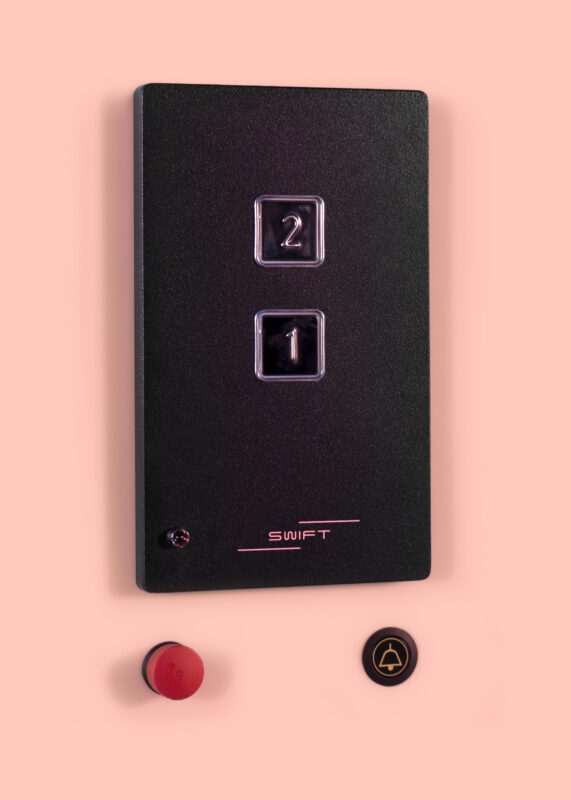
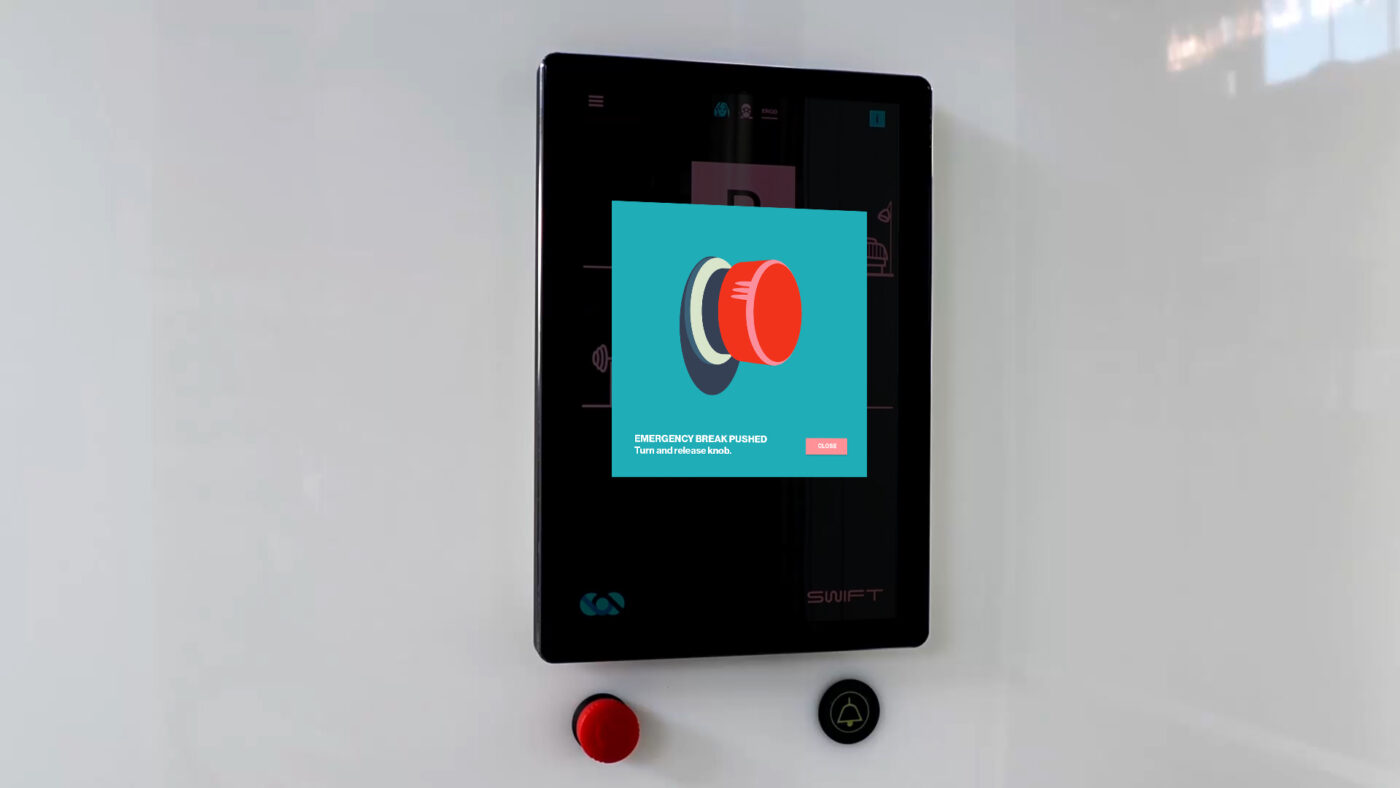
- Emergency stop buttons: Situated inside the lift, these buttons are critical in immediately cutting off machinery during emergencies.
- Safety sensors: Detection of obstructions in a doorway stops the lift when someone walks into or out of the door.
- Door interlocks: Ensures the door is closed while the lift is operating, or else it may cause a fall into it.
- Automatic shutoff: The override switch shall be provided to the lift, which cuts the main power supply during power outages, failing which the lift may not get stuck.
- Child lock: The possibility to lock the lift for unwanted usage by children.
Modern Design
Replacing the outdated, chunky, and lined machinery is now a thing of the past. Modern residential lifts are designed to complement your home’s aesthetics:
- Sleek and contemporary styles: You can purchase different combinations of colours and materials that look good in your home interior.
- Glass panels: Encourage the illusion of openness and airiness. LED lights should be installed in the lift shaft to render the area brighter.
- Compact designs: Take a minimum size of space; the more space you occupy, the more comprehensive your living conditions will be.
Seamless Integration with Home Interiors
Residential lifts are designed to integrate harmoniously with your existing home layout:
- Customizable options: Try different sizes and plans from the given selection and decide best according to your requirements and space allocation.
- Low-noise operation: Associated with the principle of the lift being as smooth as possible and do not disturb the silence in your home.
- Multiple access points: Option to have doors on different floors for convenient access from various rooms.
Increased Home Value
Adding a residential lift not only enhances your living experience but can also increase the value of your property:
- Accessibility for all: Enhances your home accessibility, giving it an edge over other properties competing for buyers with movement restrictions.
- Future-proofs your home: This builds up such a friendly and safe place for you and your family to live, with the help of which you can stay in your home for more years.
- Unique selling proposition: Makes your property exceptional compared to other buildings with similar characteristics.
Get Reliable Lift Solutions At SWIFT Lifts!
SWIFT Lifts’s affordable, appropriate residential lift provides an excellent living space. We provide a variety of efficient and trendy lifts fully compatible with your existing home, delivering comfort and accessibility to the residents. Our competent team, made up of experts, has a rich background in the lift industry. We understand your unique needs and can recommend the perfect lift solution, whether a residential lift for added convenience, a commercial lift for increased accessibility, or a platform lift for specialized applications.
Our commitment extends beyond sales. We offer comprehensive maintenance to ensure your lift operates smoothly for years. Contact us today and experience the difference. We can provide the perfect lift solution to elevate your life.
FAQs
Elevators are powered by electricity. They commonly use electric motors connected to the building’s power supply to move the elevator cabin.
Safety mechanisms, such as brakes and counterweights, prevent elevators from falling. Brakes engage in case of an emergency, and counterweights balance the cabin’s weight for smooth operation.
Traditional elevators rely on electricity, so they typically cannot operate during power outages. However, some modern elevators like SWIFT have backup power systems or use regenerative drives to enhance energy efficiency.
Safety features like emergency brakes engage if elevator cables break, preventing a free fall. These mechanisms ensure a controlled stop to protect passengers and minimize the risk of injury.
As SWIFT is a screw and nut driven lift, no cables or ropes are needed.
Improving mobile signal in an elevator can be challenging due to the enclosed space. Consider using signal boosters or installing a distributed antenna system (DAS) within the building to enhance overall signal strength, including in elevators.
Get In Touch