

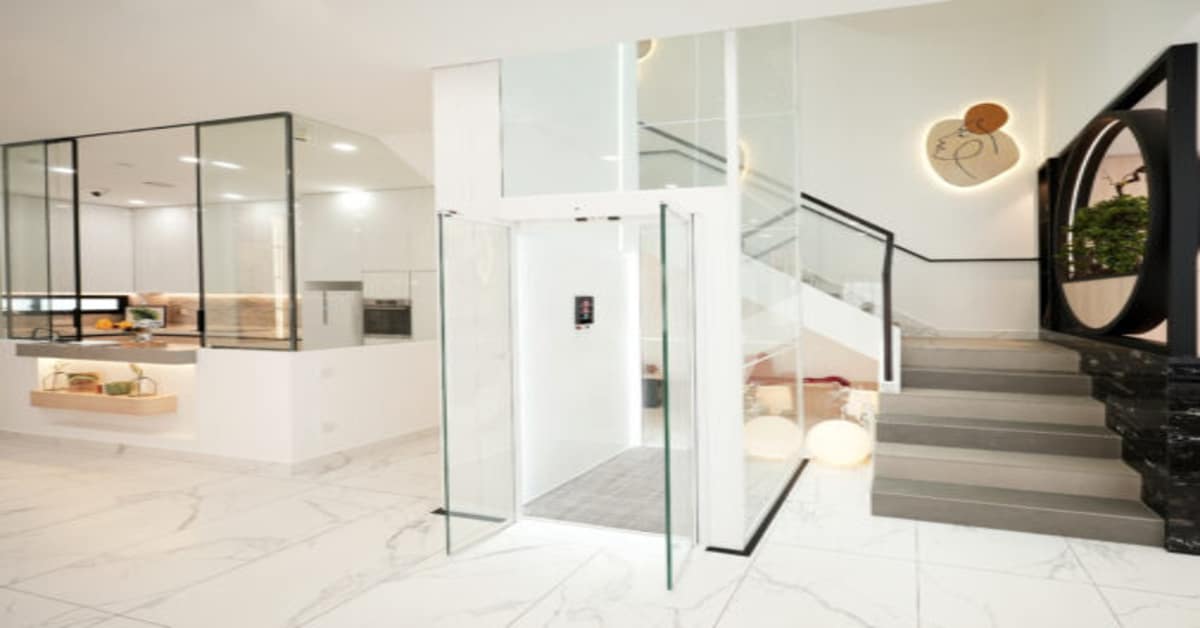
There is a particular kind of pride that Indian homeowners take in a beautifully designed home.
The attention given to Italian marble flooring in Hyderabad villas, the custom joinery in Bengaluru’s premium apartments, the careful selection of lighting fixtures in a Gurugram penthouse — these are not incidental choices. They reflect a genuine design consciousness that has grown significantly in the Indian upper-middle and premium residential market over the past decade.
Against this backdrop, the standard enclosed home lift, functional and reliable as it may be, begins to look like a missed opportunity. A box hidden behind opaque panels that interrupts the visual flow of a carefully designed interior is not the only option. The capsule lift and the glass panoramic elevator represent a fundamentally different approach, one where the lift itself becomes a design statement rather than a practical afterthought.
This guide explains what capsule and glass home lifts actually are, how they differ from standard enclosed lifts, what design and customisation options are available for Indian homes, and what the realistic investment looks like for a panoramic elevator installation in India in 2025.
What Is a Capsule or Glass Home Lift?
The terms capsule lift and glass lift are used somewhat interchangeably in the Indian market, but they describe a spectrum of design approaches rather than a single product type.
A capsule lift, in its most recognised form, is a lift where the cabin is fully or substantially visible from the outside. The enclosure surrounding the cabin uses glass or transparent acrylic panels rather than opaque walls, allowing observers to see the cabin and its occupant as they travel between floors. The visual effect is striking — a moving transparent element rising through the home creates a dynamic architectural feature that no other element in the space can replicate.
A glass panoramic lift takes this further by using structural glass not just for the cabin walls but also for the shaft enclosure that surrounds the cabin’s travel path. In a fully panoramic installation, the cabin travels within a transparent tube or glass-walled enclosure, and the passenger inside has an unobstructed view of the surrounding space on every floor they pass through. In an Indian home where the lift travels alongside an atrium, through a double-height living area, or past a landscaped interior courtyard, this panoramic experience becomes a genuinely luxurious feature of daily life.
A standard enclosed lift, by contrast, uses opaque panels for both the cabin walls and the shaft enclosure. The passenger travels in a private enclosed space and has no visual connection with the surrounding home during the journey. For pure functionality this is entirely adequate. However, some home lifts myths suggest that enclosed lifts are the only practical option, whereas in design-led homes where visual coherence and architectural ambition matter, they can represent a significant aesthetic compromise.
How Glass Lifts Differ from Standard Enclosed Lifts
The differences between a glass lift and a standard enclosed lift extend beyond aesthetics, though the aesthetic difference is the most immediately visible.
In terms of visual impact, a glass lift integrated into an Indian villa or premium apartment fundamentally changes the spatial experience of the home. A double-height entrance hall that contains a glass lift shaft distributes light between levels in a way that no other architectural element achieves. The vertical movement of the cabin through transparent enclosure creates animation in the space. Guests notice it. It becomes a conversation piece that communicates the quality and intention of the home.
In terms of spatial effect, a glass lift in a compact Indian floor plan creates a perception of greater openness than an opaque shaft. An opaque lift column in the corner of a living area reads as a solid mass that occupies space visually as well as physically. A glass enclosure in the same position reads as a volume of light and transparency, and the net impact on the perception of the room’s size and airiness is measurably different.
In terms of engineering, a glass lift requires structural glass panels that are rated to carry the loads imposed on them, not simply decorative glass fitted to a functional steel frame. The glass used in certified residential glass lift enclosures is laminated safety glass of specified thickness and interlayer composition, engineered to behave in a defined way under load and in the event of breakage. The engineering complexity of a glass shaft is higher than an equivalent panel shaft, which is one reason glass configurations carry a price premium. The visual result justifies this premium for buyers who understand what they are receiving.
In terms of maintenance, glass surfaces require periodic cleaning to maintain the visual clarity that makes them worth specifying. In Indian climates with significant dust loads, particularly in cities like Delhi, Jaipur, and Ahmedabad, the cleaning frequency for a glass shaft enclosure is higher than it would be for a powder-coated panel enclosure. This is a realistic operational consideration, not a reason to avoid glass, but it should be factored into the decision. Additionally, the performance and efficiency of lift motors used in the system also play a role in overall maintenance and long-term reliability.
Design Options and Customisation for Indian Homes
The design vocabulary available for capsule and glass home lifts in the Indian market has expanded significantly, and understanding the available options helps homeowners specify a lift that genuinely integrates with the design language of their home rather than simply being a generic glass box.
The frame is the structural element that holds the glass panels together and gives the shaft its visual character. In Swift Lifts installations, frame finish options include powder-coated black, powder-coated white, brushed stainless steel, and in custom specifications a range of RAL colours. For an Indian home with a contemporary dark palette, a matte black frame creates a graphic precision that reads as deliberately composed. For a home with warm neutral tones and natural material accents, a brushed bronze or champagne-toned frame integrates more naturally. For a pure modern minimal aesthetic with white walls and polished stone floors, a frameless or minimal white frame configuration maximises the transparency of the installation.
The cabin interior is where personal design expression reaches its most refined point. Cabin wall finishes in a glass lift can range from clear glass that maintains full transparency through the cabin, to frosted or etched glass that provides privacy while retaining translucency, to mirror-finish panels that create a different spatial effect entirely. Stainless steel wall panels in brushed or mirror finish are a popular specification in Indian premium homes because they are robust, easy to clean, and carry a quality material reference that resonates with buyers who associate premium lifts with hotel-quality finishes.
The floor of the cabin is a design detail that is often overlooked but that directly affects the quality of the complete visual impression. A cabin floor finished in the same material as the surrounding room, whether marble, engineered wood, or porcelain tile, creates visual continuity between the lift and its immediate environment. A contrasting floor finish can create deliberate visual contrast that emphasises the cabin as a discrete design object.
Lighting within the cabin and within the shaft structure is the element that most affects how the glass lift reads at night and in interior conditions where natural light is limited. Warm white LED strips concealed within the cabin ceiling create an inviting ambient quality inside. LED strips embedded in the shaft structure at each floor level create a vertical light feature that illuminates the surrounding space as well as making the lift visually present after dark. Swift Lifts technical consultants advise on integrated lighting specifications as part of the pre-installation design discussion for every Indian installation.
Space Requirements for Capsule and Glass Lifts in Indian Homes
For Swift Lifts glass configurations, the floor opening required at each level ranges from 900 by 1000 millimetres for the compact S cabin to 1100 by 1400 millimetres for the XL accessibility cabin. These dimensions are identical to the equivalent standard panel configurations because the structural frame that carries the glass panels has the same external dimensions as the frame that would carry panel infill.
The overhead clearance required above the top floor landing is 2275 millimetres, which standard Indian residential construction with floor-to-floor heights of 2.8 to 3.2 metres provides comfortably. The pit depth required is 50 millimetres, managed through a small floor build-up at the ground level entry point without any excavation below the existing slab.
The positioning of a glass lift within the home’s floor plan is, however, more design-sensitive than the positioning of a panel lift. A glass lift that is positioned against a highly patterned feature wall may create a visually busy effect that diminishes rather than enhances the design quality. A glass lift positioned in a naturally lit zone of the home, where daylight passes through the shaft and distributes between floors, makes the most of the transparency that the glass installation provides. A glass lift positioned alongside a staircase creates a visual dialogue between the two vertical elements that is architecturally powerful. These positioning decisions are worth discussing with a design-conscious Swift Lifts consultant before the final installation position is confirmed.
Investment: What a Glass or Capsule Home Lift Costs in India
The investment in a capsule or glass home lift in India reflects the premium engineering and material quality that separates a transparent architectural feature from a standard functional enclosure.
For a two-floor glass configuration Swift Lifts installation in an Indian villa or premium apartment, total installed costs including equipment, glass shaft structure, floor opening preparation, electrical connection, and commissioning typically range from 12 to 20 lakh rupees depending on the cabin size, the degree of glazing, and any custom specifications. For a three-floor installation, total costs range from 16 to 26 lakh rupees. For a fully custom panoramic installation with structural glass shaft walls, premium cabin finishes, and integrated lighting design, costs for a three-floor installation can reach 25 to 35 lakh rupees or more.
The premium over a standard panel lift of equivalent travel height and cabin size is typically 30 to 60 percent for a glass configuration. This premium reflects the structural glass engineering, the more demanding installation process, and the design specification work involved in integrating a transparent lift into a specific home’s architectural language.
For Indian homeowners making this investment in the context of a premium villa or high-end apartment, the return is both experiential and financial. A well-specified glass capsule lift adds measurable value to a property in the Indian premium residential market, particularly in cities like Mumbai, Delhi NCR, Hyderabad, and Bengaluru where design-conscious buyers associate glass lifts with architectural quality and are prepared to pay a premium for homes that demonstrate genuine design ambition.
Frequently Asked Questions
A capsule or glass home lift uses transparent structural glass panels for the shaft enclosure and in many configurations the cabin walls, allowing the cabin and its occupant to be seen as they travel between floors. This creates a visual and spatial impact that is fundamentally different from a standard enclosed lift where opaque panels surround the cabin on all sides. In a designed Indian home, a glass lift becomes an architectural feature that distributes light between floors, creates visual connection across levels, and communicates design quality in a way that no opaque enclosure can. Structurally, the glass panels in a certified installation are load-rated laminated safety glass, not decorative surfaces, and the complete installation meets the same safety certification requirements as a standard panel lift. Swift Lifts glass configurations are certified to international safety standards and are available with a range of frame finishes, cabin interior specifications, and integrated lighting options that allow the installation to be tailored to the specific design language of the home.
A glass configuration Swift Lifts installation in an Indian home typically costs between 12 and 20 lakh rupees for a two-floor installation and 16 to 26 lakh rupees for three floors, fully installed including all civil works, electrical connection, and commissioning. Fully custom panoramic installations with structural glass shaft walls and premium specifications can reach 25 to 35 lakh rupees for a three-floor installation. The premium over a standard panel lift of equivalent size is typically 30 to 60 percent, reflecting the structural glass engineering, the more demanding installation process, and the design specification involved. Swift Lifts provides free site assessments and detailed design consultations for Indian homeowners considering a glass lift, with transparent itemised quotations that cover every element of the project.
The Lift as a Design Investment
The capsule or glass home lift is not the right choice for every Indian home or every Indian homeowner. For families whose primary need is safe, reliable vertical mobility and for whom design is a secondary consideration, a standard panel lift from Swift Lifts delivers identical safety, identical engineering quality, and identical warranty coverage at a lower investment.
For Indian homeowners who have invested seriously in the design quality of their home, who want every element of the interior to contribute to a coherent visual experience, and who understand that a glass lift is not simply a functional box with transparent walls but a genuine architectural feature that changes how the home looks, feels, and is valued in the market, the capsule or panoramic elevator is the specification that completes the home’s design ambition.
Swift Lifts India combines Scandinavian engineering precision with genuine understanding of Indian premium residential design to deliver glass lift installations that stand alongside the finest elements of the homes they inhabit. The five-year comprehensive warranty, the EcoDrive battery backup reliability, and the local Indian service team ensure that the design investment continues to perform as intended across the full lifespan of the installation.
Contact Swift Lifts India for a free design consultation and site assessment. We will discuss your home’s design language, assess the spatial options for a glass installation, and give you a complete picture of what a capsule or panoramic lift would look like and cost in your specific home.


