


Elevator weight limits are crucial for safety and performance. Exceeding limits can cause serious issues. It may damage the system and increase risk. Understanding capacity helps ensure safe use. It also extends lift lifespan. This guide explains why elevator weight limits matter.
Have you ever thought about what happens when elevator weight limits are exceeded? It’s not just a matter of numbers—it’s a critical safety issue. Exceeding these limits can compromise the elevator’s structural integrity, risking breakdowns and accidents. More than that, it puts undue stress on the entire building’s infrastructure, potentially leading to costly repairs and downtime. Join us as we delve into why these weight limits matter and how you can ensure the safety and reliability of domestic lifts.
TL’DR
- Audience: Home lift owners/building managers needing to understand overload risks and correct daily use.
- Trust: By John Löwbäck, Swift co-founder, 20+ yrs in elevator engineering/manufacturing-adjacent roles.
- Covers: What sets capacity, why overload is risky (equipment strain, entrapment, liability), and how to avoid it.
- Stats: Standard elevators max 250-500kg; hydraulic lifts 1,134-2,268kg; modern lifts use overload sensors/alarms.
Understanding Elevator Weight Limits
Designed for Specific Capacity
Each elevator is engineered to handle a specific weight capacity, considering various factors such as the elevator car’s size and materials, the hoisting mechanism’s strength, and the intended number of passengers it can safely transport.
Factors Determining Capacity
The primary determinants include the elevator’s size and construction materials, the efficiency of its hoisting mechanism, and the maximum number of passengers it can accommodate comfortably.
- Size and materials: The size and materials of the elevator car directly affect its weight-bearing capability.
- Hoisting mechanism: A robust hoisting, typically screw and nut, hydraulic or traction-based, determines how efficiently the elevator can move its load.
- Number of passengers: The number of passengers allowed is critical, as each person adds to the total weight the elevator must safely transport.
These elements together determine the elevator’s maximum capacity and ensure safe operation within specified weight limits, which are crucial for maintaining both passenger safety and the longevity of the elevator system.
Safety Regulations
Adherence to safety regulations, including those outlined in building codes and manufacturer specifications, ensures elevators operate within safe limits to prevent accidents and maintain reliability.
Understanding these factors is crucial for building owners and managers to ensure compliance, uphold safety standards, and prolong the lifespan of lifts for homes.

Why Elevator Weight Limits Are Crucial?
Elevator weight limits are crucial for several compelling reasons, primarily concerning safety, equipment integrity, and liability considerations.
Equipment Strain and Damage
Exceeding weight limits places undue strain on the elevator’s components, including its motor, cables, and braking system. This strain can lead to accelerated wear and tear, frequent breakdowns, and costly repairs. Over time, it can compromise the elevator system’s overall reliability and lifespan.
Passenger Safety Issues
Safety is paramount in elevator design and operation. Excessive weight can overload the elevator, causing it to malfunction or become stuck between floors. This poses serious safety risks to passengers, such as entrapment or even incidents of structural failure. Adhering to weight limits ensures elevators operate within safe parameters, reducing the likelihood of accidents and ensuring passenger well-being.
Liability Issues
Building owners and managers are legally responsible for maintaining safe conditions for occupants and visitors. Failure to adhere to weight limits can lead to liability issues in case of accidents or injuries resulting from elevator malfunctions or failures caused by overloading. Negligence in maintaining proper elevator safety standards can result in legal repercussions and financial liabilities.
In conclusion, respecting elevator weight limits is not merely a matter of compliance but a critical practice to safeguard equipment, protect passenger safety, and mitigate legal risks.
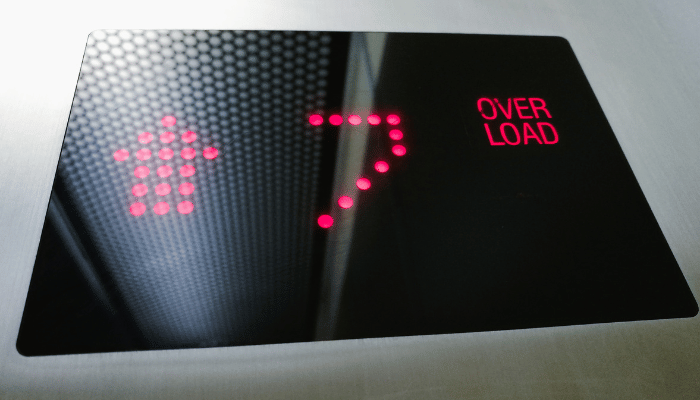
How to Avoid Elevator Overload?
You can follow these practical guidelines to prevent elevator overload and ensure safe operation.
Pay Attention to Weight Limit Signs
Every elevator displays a maximum weight capacity sign. Respect this limit by monitoring the combined weight of passengers and any cargo being transported. Distribute weight evenly to avoid exceeding the designated capacity.
Divide Large Groups or Heavy Cargo
If traveling with a large group or transporting heavy items, consider dividing them into smaller loads that comply with the elevator’s weight limit. This reduces the risk of overloading and ensures the safety of all passengers.
Report Suspected Overloading
If you suspect the elevator is overloaded or behaving unusually (e.g., slow movement, unusual noises), refrain from using it and report the issue to building management or maintenance immediately. Prompt reporting can prevent potential accidents and ensure that the elevator is promptly inspected and serviced if necessary.
Upgrade Your Home With SWIFT Residential Lifts
Elevate every moment with SWIFT Lifts—where comfort meets cutting-edge technology. We offer sleek, modern residential home elevators that seamlessly integrate into your home, providing effortless access across multiple floors. Whether you’re enhancing accessibility for aging loved ones or simply upgrading your lifestyle, our lifts promise reliability, safety, and style. Experience the pinnacle of innovation with customizable options and eco-friendly features that align with your vision. Contact us today and rise above the ordinary!
Frequently Asked Questions
1. What happens if you exceed the elevator weight limit?
2. What is the maximum weight in an elevator?
3. What is the weight limit for a hydraulic elevator?
4. How do you calculate your weight in an elevator?
5. How can I buy domestic lifts at SWIFT?
6. How do elevators detect excess weight?
7. Can exceeding weight limits damage a home elevator?
8. Why do elevators have weight limits?
Get in Touch!


