

If you’re building or renovating a 3–4 floor independent house in India, a home lift has probably crossed your mind. And rightfully so, the conversation has shifted dramatically in the last few years.
A lift is no longer just something you see in five-star hotels or high-rise apartments. It’s becoming a real consideration for upper-floor bungalows in South Delhi, hillside villas in Pune, and sprawling independent homes across Hyderabad, Bengaluru, and Gurugram.
But here’s the thing, most of the information online talks about apartment lifts. Installing a lift in your own independent house is a different situation entirely. The decisions you make, the permissions you need, the civil work involved, and what it actually costs, all of it plays out differently when you own the entire structure and the plot it stands on.
This guide is for you if you’re planning ahead. Not rushing into a purchase, but genuinely trying to understand what’s involved before you call a vendor.
TL;DR
- What it covers: Walks through everything needed before installing a home lift in an independent house, villa, or bungalow in India, from permissions and pit vs. pit-less options to costs and installation timelines.
- Who it’s for: Owners of independent houses, villas, and bungalows in cities like Delhi, Bengaluru, Mumbai, Pune, and Chennai planning a lift for their own property.
- Why trust it: Written by Aziz Acar, a 25+ year elevator industry veteran, with concrete regulatory notes, warranty terms, and CE certification details rather than generic advice.
- Problem it solves: Removes uncertainty around permits, structural requirements, and true costs, so homeowners can plan and budget realistically before committing.
- Key stats: A 2-floor installation runs 19 to 22 lakh rupees plus 1.5 to 4 lakh for civil work, with annual maintenance at 25,000 to 60,000 rupees and the full process taking 6 to 8 weeks.
How a Home Lift in an Independent House Is Different from an Apartment
In an apartment building, the lift shaft is a shared structure. The builder designs it, the society maintains it, and you have zero say in where it goes or how it looks. In your own independent house, villa, or bungalow, you control all of that, and that’s both the opportunity and the responsibility. This flexibility allows homeowners to make important design decisions, including choosing the ideal lift direction as per vastu, selecting the installation location, and ensuring the lift complements both the home’s layout and aesthetic preferences.
Structural freedom is real. You can decide whether the lift goes in the centre of a spiral staircase, in a corner of the living area, or as an external glass structure visible from the garden. Architects love working with this kind of flexibility. You can also choose between a pit-based system and a pit-less installation, a distinction that matters enormously in older bungalows or properties where digging isn’t practical.
Pit vs. pit-less is one of the first decisions you’ll need to make. Traditional hydraulic lifts require a pit dug below the ground floor, typically 100 to 150mm deep. Screw-driven lifts, which are now the more modern choice for private residences, can be installed without any pit at all. SWIFT’s lifts, for instance, use a screw-and-nut drive mechanism that sits entirely within the floor’s existing plane, requiring just a hole-through-floor opening rather than excavation. For a bungalow with marble flooring you’re not willing to disturb, or a heritage property where the foundation can’t be touched, this matters a lot.
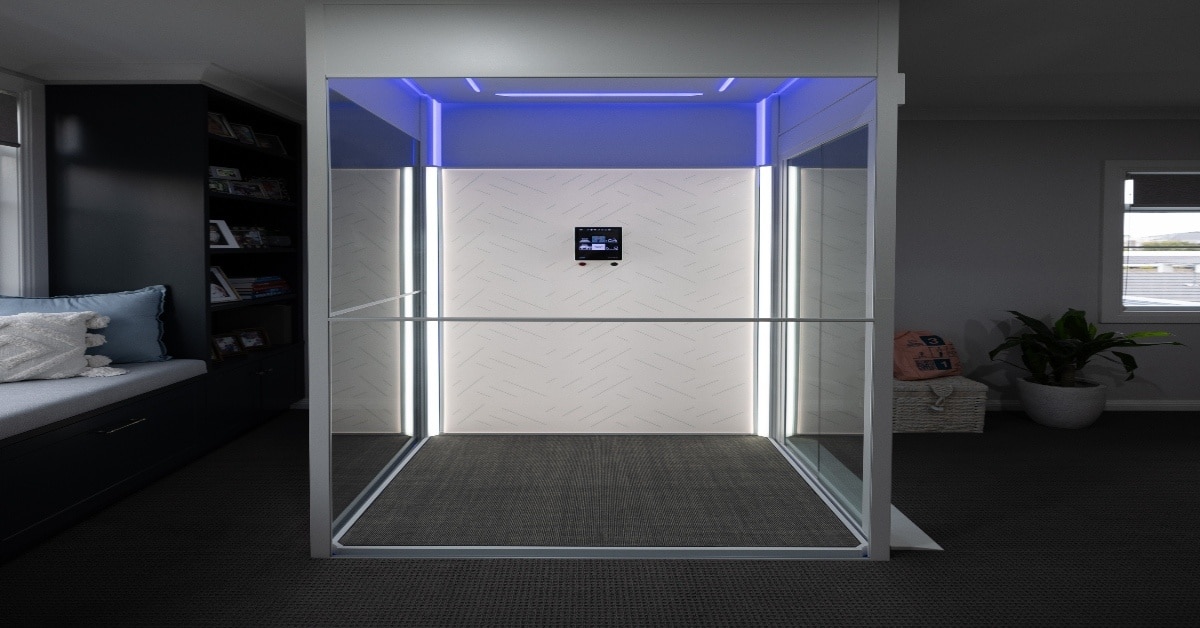
Shaft construction is another area of divergence. In an independent house, you can build a dedicated masonry shaft, use the lift’s own self-supporting structure, or even opt for a glass enclosure if aesthetics are a priority. Many premium villa owners in India are now choosing glass or semi-glass shafts that double as a design statement, visible from the drawing room, lit from above, finished in materials that match the rest of the interior.
Do You Need Permission to Install a Home Lift in an Independent House in India?
This is the question that most homeowners ask first, and the honest answer is: it depends on where you live and how the lift is being installed.
There is no single national regulation governing home lift installation in India. The Bureau of Indian Standards (BIS) has guidelines, and the National Building Code of India (NBC) addresses lifts in buildings, but enforcement at the individual residential level is handled by local bodies, and that creates significant variation city to city. This is particularly important for homeowners researching factors such as the small lift for home price in Bangalore, as installation requirements, structural approvals, and local regulations can influence the overall project cost and timeline.
General rule of thumb: If your home lift is being installed within an existing residential structure without any structural alteration to the building’s exterior or load-bearing walls, most municipal bodies across India do not require a separate building permit. However, if you are:
- Adding an external shaft or structure,
- Cutting through a load-bearing slab,
- Or the property falls under a heritage conservation zone,
then you will need to get drawings approved by a structural engineer and, in many cities, file for a modification to your building plan with the local municipal authority (BBMP in Bengaluru, GHMC in Hyderabad, MCD or DDA in Delhi, PCMC or PMC in Pune, and so on).
States with stricter local requirements: Maharashtra (especially Mumbai and Pune) and Tamil Nadu (particularly Chennai) tend to have more active enforcement for structural modifications. In these cities, it’s worth speaking to a local civil engineer before you start, even if the lift vendor says it’s straightforward.
The practical reality for most independent house owners in Tier 1 cities: if you’re working with a reputable lift company that provides CE-certified equipment, handles structural drawings as part of their service, and coordinates with a licensed installer, the permission process is usually manageable and doesn’t add significant time to the project.
One important thing to note, the installation company should always provide you with test certification post-installation. SWIFT, for example, carries out a formal Commissioning Test after every installation to verify all safety parameters before the lift goes into daily use.
What Does It Actually Cost? Real Numbers for Indian Homes in 2026
Let’s get to what most people really want to know.
The installed cost of a home lift in an independent house or villa in India, covering the lift unit, basic civil work (shaft or opening), electrical connection, and installation, typically falls within the following ranges in 2026. The final investment can vary depending on the lift type you choose, whether it’s a standard residential model or a premium capsule lift for home designed to enhance both accessibility and interior aesthetics. Capsule lifts often feature panoramic glass designs and custom finishes, which can influence the overall project cost.
2-floor installation (Ground + 1st floor): ₹19,00,000 to ₹22,00,000 + taxes for a quality screw-driven lift from a reputable brand. This is for the lift unit itself. Civil/shaft work is additional and can range from ₹1,50,000 to ₹4,00,000 depending on the complexity of the opening and the material chosen for the enclosure.
3-floor installation (adding one more stop): Add approximately ₹2,00,000 per additional floor to the base price. So a Ground + 2nd floor setup typically comes to ₹21,00,000 to ₹24,00,000 + taxes, before civil work.
4-floor installation: Around ₹23,00,000 to ₹26,00,000 + taxes for the lift, plus civil work. Larger bungalows with 4 floors are fairly common in cities like Ludhiana, Chandigarh, Ahmedabad, and parts of Delhi NCR.
What affects the final number:
- Lift size: A compact XXS cabin (830 × 600 mm floor, 2-person) costs roughly the same as a larger M or L size, price differences between sizes are relatively minor, so most families go for the M or L to accommodate wheelchairs or larger loads.
- Finish and materials: Glass panels, custom lighting, and premium interiors can add ₹50,000 to ₹2,00,000 to the package.
- Civil and electrical: A new electrical connection (single phase, 6A/8A fuse for a SWIFT lift) is typically straightforward in an independent house. Civil work varies based on slab thickness and flooring material.
Annual maintenance: Budget ₹25,000 to ₹60,000 per year for a proper annual maintenance contract (AMC) with the manufacturer or an authorised service partner. Do not skip this, most warranties, including SWIFT’s 5-year product warranty (10 years on the drive screw and nut), require an active service contract to remain valid after the first year.
From Site Visit to Live Lift: The Realistic Timeline
The question we hear most from homeowners mid-renovation is: “How quickly can this actually happen?”
Here’s a realistic breakdown:
Week 1–2: Site assessment and design sign-off A qualified surveyor visits your home, takes measurements, assesses the slab thickness between floors, checks the electrical supply, and identifies the best placement for the lift. You’ll receive a layout drawing, a specification sheet, and a final quote. Your job at this stage is to confirm placement and approve drawings.
What the installer needs from you at this point:
- Structural drawings of the building (or the original architect’s plans)
- Confirmation of the hole-through-floor dimensions you can accommodate
- Electrical access point near the proposed lift location
- A designated area for the control unit (usually compact, placed at the base or top floor)
Week 3–4: Manufacturing and logistics Most quality lift manufacturers, including SWIFT, build each lift to order. After design sign-off, lead time for manufacturing and shipping is typically 3–4 weeks for India deliveries. Your civil contractor should be cutting the slab openings and preparing the shaft (if applicable) during this window.
Week 5–6: Installation The actual installation of a screw-driven pit-less lift in a prepared opening takes 2–3 days for a standard 2–3 floor configuration. No heavy machinery required, no extended disruption to the household. The installation team handles assembly, wiring, and initial calibration.
Week 6–8: Commissioning and handover After installation, a formal commissioning test is carried out. Every safety function is verified, emergency stop, battery backup, door interlocks, load test. You receive a commissioning certificate, the warranty is activated, and your team is trained on basic operation. First service visit is typically scheduled within 3–6 months.
Total: 6 to 8 weeks from site visit to first ride. If your civil work is delayed (which it often is in India, let’s be honest), add a week or two. Coordinate your slab-cutting with your civil contractor early.
Choosing the Right Lift for Your Villa or Bungalow
Not all home lifts are built for independent houses. Here’s what actually matters when you’re evaluating options:
Pit-less is usually the better choice. Unless you’re building from scratch and can plan the pit into the foundation, avoid systems that require significant excavation. Screw-driven lifts eliminate this requirement entirely, making them particularly suitable for luxury residences where preserving the existing structure is a priority. This approach aligns well with premium architectural styles such as The Norwegian Villa, where clean design, efficient use of space, and minimal structural disruption are key considerations during home upgrades.
Battery backup is non-negotiable in India. Power cuts are a reality, and getting stuck between floors is not a situation you want to explain to ageing parents or young children. SWIFT’s EcoDrive system, inspired by the same battery architecture used in electric vehicles, keeps the lift operational even during power failures and actually charges the batteries when the lift moves downward. This is one of the key reasons it resonates strongly with Indian homeowners.
Size matters more than you might think. A lift that fits a single person standing upright is not a home lift, it’s a dumbwaiter. The minimum practical size for a home lift serving a family with elderly members or anyone with limited mobility is the M size (830 × 1100 mm), which can take a wheelchair user comfortably. If you’re building a large villa and anticipate entertaining, the L or XL (1200 mm or wider) gives you genuine usability.
Certification over claims. Ask specifically for CE certification. SWIFT’s lifts comply with the European Machinery Directive 2006/42/EC and European Standard EN81-41. That level of certification carries real weight in terms of safety engineering and construction quality.
Frequently Asked Questions
Do I need government permission to install a lift in an independent house in India?
In most cases, no specific permit is required for installing a lift within an existing independent house as long as the structure is not being altered externally and you’re not cutting through load-bearing elements without engineering approval. That said, local municipal rules vary. In cities like Mumbai, Pune, and Chennai, it’s advisable to check with your local body or have your architect confirm. Always get structural drawings from a licensed engineer if any slab-cutting is involved.
What is the best type of home lift for a 3-floor bungalow in India?
A screw-driven, pit-less home lift is generally the best fit for a 3-floor bungalow, it requires no foundation pit, needs minimal civil work, and can be installed in a pre-cut floor opening. Battery backup is essential given India’s power supply situation. Hydraulic lifts are cheaper upfront but come with higher ongoing maintenance costs and oil-related concerns. Traction lifts are better suited to commercial or high-rise applications.
How much does it cost to install a home lift in a villa or independent house in India?
In 2026, expect to spend ₹19,00,000 to ₹22,00,000 + taxes for a 2-floor (G+1) installation, plus ₹2,00,000 per additional floor. Civil work, slab cutting, shaft enclosure, electrical, adds ₹1,50,000 to ₹4,00,000 depending on the complexity. Annual maintenance contracts run ₹25,000 to ₹60,000 per year. Prices do not vary significantly by cabin size, so there’s no reason to compromise on space.
Does a home lift for an independent house require a pit?
Modern screw-driven lifts do not require a pit. They are installed through a standard floor opening (dimensions depend on the lift size chosen, for example, an M-size SWIFT lift needs a 940 × 1525 mm opening through each floor). This is significantly less disruptive than traditional pit-based hydraulic systems and is particularly relevant for homes with premium flooring or older construction where excavation is impractical.
How long does installation of a home lift in an independent house take in India?
From the initial site visit to a commissioned, ready-to-use lift: typically 6 to 8 weeks. The lift itself takes 2–3 days to physically install once your civil work (slab openings, shaft preparation) is ready. The manufacturing and delivery timeline is usually 3–4 weeks after design sign-off. If you’re mid-renovation, the best time to start the conversation is when your structure is at roof-slab or second-floor slab level, that gives your civil team time to incorporate the lift openings without rework.


