

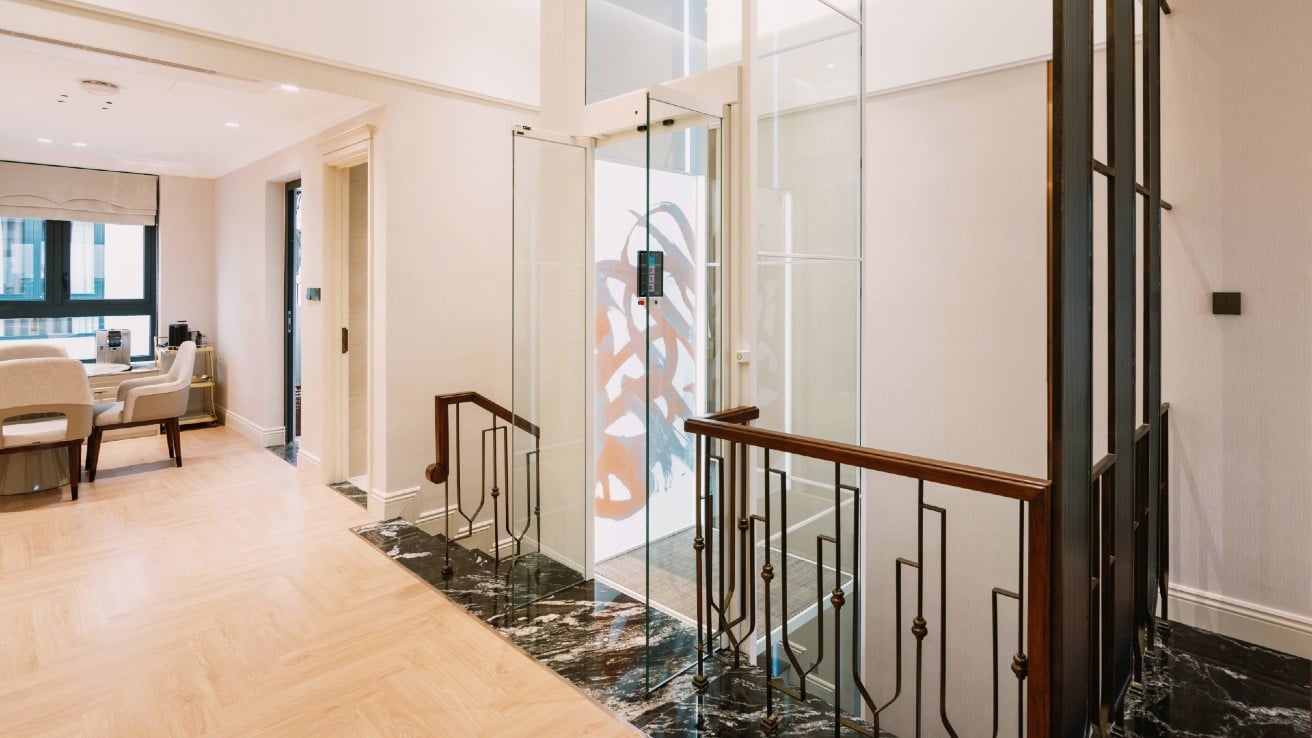
Installing a home lift in the UK shouldn’t feel like navigating a legal minefield, yet for many homeowners the regulatory side of things causes more anxiety than choosing the actual lift.
Will the council reject your application? Do you even need to apply? What if you’re in a conservation area? And who’s responsible for all the paperwork when you just want to make your home accessible for your elderly mum?
The truth is that most home lift installations don’t require planning permission, but the exceptions are important enough that you need to understand them before spending £20,000 on a lift you might not be allowed to install. Local authority requirements vary, building regulations always apply, and certain property types face additional scrutiny that can delay or complicate installations.
Let’s work through the actual rules, the common scenarios British homeowners face, and the practical reality of getting your home lift approved without unnecessary stress or expense.
The Basic Rule: Internal Home Lifts and Permitted Development
Here’s the starting point that applies to most UK homeowners: installing a home lift inside your existing property is generally considered permitted development, meaning you don’t need planning permission.
This falls under the principle that internal alterations to your home are your business, not the council’s, provided you’re not changing the external appearance, creating additional dwellings, or compromising structural safety. You can reconfigure rooms, move walls, install staircases, and yes, install lifts, without seeking planning consent.
The key word here is “internal.” If your lift installation is entirely within the existing building envelope, uses existing floors and ceilings, and doesn’t alter the external appearance of your property, you’re almost certainly fine to proceed without planning permission.
However, “almost certainly” isn’t “definitely,” and that’s where things get complicated. Building regulations still apply universally, even when planning permission doesn’t. And several important exceptions can catch homeowners off guard.
When You Definitely Need Planning Permission
Certain scenarios always require planning permission, regardless of how straightforward your installation seems.
External Lift Installations
If you’re installing a lift on the outside of your property, perhaps because internal space is too limited or you’re creating accessible entry to your home, you absolutely need planning permission. The lift structure will change your property’s external appearance, and anything visible from the street or affecting your property’s footprint requires consent.
This particularly affects terraced homes in cities like London, Bristol, or Edinburgh where internal space is tight and outdoor installation seems the logical solution. Your council will assess the visual impact, whether it affects neighbours’ amenity, and if it’s in keeping with the streetscape.
Listed Buildings
If your property is listed (Grade I, Grade II*, or Grade II), any alteration requires listed building consent, even purely internal changes. This applies whether you’re installing a lift, replacing windows, or removing a non-original partition wall.
The process scrutinises whether your proposed lift damages historic fabric, affects the building’s character, or compromises architecturally significant features. Listed building officers will want detailed plans showing exactly how the lift integrates with the existing structure.
SWIFT has successfully completed installations in listed properties across the UK, working with conservation officers to demonstrate that battery-driven platform lifts can install with minimal impact on historic fabric. The self-supporting structure and zero pit requirement mean you’re not excavating under 18th-century foundations or removing original flooring.
Conservation Areas
Properties in conservation areas face additional restrictions designed to preserve the area’s character. While internal alterations may not require planning permission, external changes definitely do, and the bar for approval is higher than standard planning applications.
Permitted Development Rights Removed
Some properties have had permitted development rights removed, often through Article 4 directions in areas where councils want tighter control over alterations. This is common in historic town centres, areas of outstanding natural beauty, and neighbourhoods with strong architectural character.
Check with your local planning authority whether your property has full permitted development rights. If they’ve been removed, you’ll need permission even for standard internal installations.
Flats and Leasehold Properties
If you live in a flat or own a leasehold property, you’ll need approval from your freeholder or management company regardless of planning regulations. Your lease almost certainly contains restrictions on structural alterations, and installing a lift definitely qualifies.
Many leaseholders discover too late that their freeholder objects to lift installations due to concerns about affecting the building’s structure, creating noise for neighbours, or impacting common areas if the lift shaft passes through spaces that aren’t exclusively yours.
Building Regulations: The Requirement Nobody Can Escape
Even when planning permission isn’t required, building regulations always apply to home lift installations. This confuses many homeowners who assume that avoiding planning permission means avoiding all bureaucratic hurdles.
Building regulations ensure your lift installation meets safety standards, doesn’t compromise structural integrity, complies with fire safety requirements, and provides adequate means of escape if necessary. You’ll need to either submit a building notice or use a competent person scheme installer who self-certifies compliance.
What Building Regulations Cover for Home Lifts
Part M (Access to and use of buildings) addresses accessibility standards. Your lift must be safely accessible, properly sized if intended for wheelchair use, and fitted with appropriate controls and safety features.
Part B (Fire safety) becomes relevant if your lift shaft creates a potential route for fire spread between floors. You may need fire-rated enclosures, appropriate ventilation, or modifications to ensure the lift doesn’t compromise your home’s fire safety.
Part A (Structure) requires that your property’s structure can safely support the lift and its maximum load. For most modern properties, this isn’t problematic, but older homes with suspect floor joists or foundations may need structural reinforcement.
Part E (Resistance to the passage of sound) applies if your installation could create noise issues, particularly in semi-detached or terraced homes where neighbours might be affected.
Who Handles Building Regulations Compliance?
Reputable lift installers handle most building regulations compliance on your behalf. They should be registered with competent person schemes that allow them to self-certify their work meets building regulations, or they’ll coordinate with your local building control department to arrange inspections.
SWIFT, for example, manages the entire building regulations process for homeowners, submitting documentation, arranging inspections if required, and providing completion certificates. You shouldn’t be navigating building control bureaucracy yourself unless you’re using a cowboy installer who doesn’t understand their responsibilities.
Practical Scenarios: What Happens in Real UK Homes
Let’s work through common situations British homeowners actually face.
Scenario 1: Victorian Terrace in Islington, London
Sarah and Michael want to install a lift in their three-storey Victorian terrace so Sarah’s mother can stay with them without struggling on steep stairs. The property isn’t listed but sits in a conservation area.
Planning permission required? No, provided the installation is entirely internal with no external changes visible from the street.
Building regulations? Yes, absolutely. The terrace shares party walls with neighbours, so Part E (sound insulation) is particularly relevant. The age and construction of the property require structural assessment to ensure floors can support the lift.
Key considerations: SWIFT’s platform lift installed beside the existing staircase with acoustic dampening on the shared wall. Building control approval took three weeks. Total installation completed in four days once approved.
Scenario 2: Listed Georgian Townhouse in Bath
Richard owns a Grade II listed townhouse and wants to install a lift for accessibility as he approaches retirement.
Planning permission required? No for the lift itself, but listed building consent is absolutely required.
Building regulations? Yes, with additional scrutiny due to the building’s age and protected status.
Key considerations: The application required detailed drawings showing how the lift would be positioned without damaging original features like cornicing or removing period floorboards. SWIFT’s zero-pit installation was specifically advantageous because it avoided excavating under historic foundations. The conservation officer approved the installation on condition that it could be removed in future without permanent damage to the building fabric. Approval took eight weeks.
Scenario 3: 1960s Detached House in Surrey
Patricia and John have a standard 1960s detached house and want a lift installed to avoid eventually moving to a bungalow.
Planning permission required? No. Standard internal installation in a property with no restrictions.
Building regulations? Yes, but straightforward compliance for a property of this age and construction type.
Key considerations: This represented the simplest scenario. SWIFT submitted building regulations documentation, received approval within two weeks, and completed installation in three days. Total process from decision to working lift: five weeks.
Scenario 4: Bungalow with External Lift in Cornwall
James uses a wheelchair and wants an external platform lift installed at the rear of his bungalow to access a raised patio area.
Planning permission required? Yes, because the lift is external and creates a new structure in the garden.
Building regulations? Yes, with attention to weatherproofing and outdoor safety standards.
Key considerations: The planning application included details of the lift’s appearance, dimensions, and positioning. Because it was rear-facing and not visible from the street, approval came through without objections in six weeks. The outdoor-rated SWIFT platform lift withstands British weather conditions and has operated reliably through two Cornish winters.
Scenario 5: Semi-Detached Home in Manchester
Diane wants to install a lift in her semi-detached home, with the lift shaft positioned on the party wall shared with her neighbour.
Planning permission required? No for internal installation.
Building regulations? Yes, with particular attention to Part E (sound insulation) and ensuring the installation doesn’t affect the structural integrity of the party wall.
Key considerations: Diane wisely informed her neighbour before proceeding, which avoided potential disputes. The building control inspector required additional sound insulation measures on the party wall. SWIFT installed acoustic dampening as part of the installation. Neighbour relations remained good because the lift operates quietly and no structural issues affected their side of the property.
Common Mistakes That Cost Homeowners Money and Time
Through conversations with building control officers and homeowners who’ve navigated this process, several mistakes emerge repeatedly.
Assuming No Planning Permission Means No Approvals Needed
Many homeowners think that if planning permission isn’t required, they can just crack on with installation. Then building control contacts them mid-installation to halt the work. Always confirm building regulations compliance before starting, even if planning permission isn’t needed.
Not Checking Lease Restrictions for Flats
Leaseholders sometimes only discover their freeholder’s objection after they’ve paid a deposit to a lift company. Always check your lease and get written approval from your freeholder before committing financially.
Installing Without Proper Certification
Some homeowners use installers who don’t provide proper building regulations certification. Years later, when selling, the missing paperwork creates serious problems. Buyers’ solicitors routinely request evidence of building regulations compliance for any significant alterations made after you purchased the property. Missing documentation can knock thousands off your sale price or even collapse the sale entirely.
Ignoring Neighbours in Semi-Detached or Terraced Properties
While you don’t legally need your neighbour’s permission for internal alterations, informing them avoids disputes. Noise during installation and ongoing operational noise can cause friction. Better to have a conversation upfront than deal with complaints to building control or environmental health later.
Underestimating Listed Building Consent Timescales
Listed building applications take longer than standard planning permission. Budget eight to twelve weeks minimum, potentially longer if conservation officers request amendments to your proposal. Don’t book installation dates until you have formal consent in hand.
How Reputable Installers Handle the Approval Process
The difference between reputable lift companies and cowboys often comes down to how they handle regulatory compliance.
What SWIFT Provides
SWIFT assigns a project coordinator who manages the entire approval process. They conduct an initial site survey to identify any planning or listed building requirements, prepare and submit building regulations documentation, liaise with building control or approved inspectors, coordinate any required inspections, and provide all completion certificates and documentation.
This isn’t an optional extra; it’s included in the installation package. You shouldn’t be paying separately for someone to fill out building control forms.
What Cowboys Don’t Provide
Rogue installers often dismiss regulatory requirements as unnecessary bureaucracy, install without proper approvals, don’t provide completion certificates, and disappear when homeowners later face enforcement action or can’t sell their property.
The short-term saving of a few hundred pounds on compliance paperwork becomes a nightmare when you’re trying to sell and discover the installation was never properly certified.
Timeline Expectations for Different Scenarios
Understanding realistic timescales helps you plan properly.
Standard Internal Installation (No Planning Permission Required)
Building regulations submission to approval: 2-4 weeks. Installation once approved: 3-5 days. Total from decision to working lift: 5-8 weeks.
Internal Installation in Listed Building
Listed building consent application: 8-12 weeks. Building regulations approval: 2-3 weeks (often processed concurrently). Installation: 3-5 days. Total: 10-16 weeks.
External Lift Installation
Planning permission application: 8-13 weeks (including consultation periods). Building regulations approval: 2-3 weeks. Installation: 4-7 days. Total: 12-18 weeks.
These timelines assume no complications. If conservation officers or planning departments request additional information or amendments, add several more weeks.
Does Installing a Home Lift Affect Property Value?
This concerns many homeowners considering lifts. Will installing a lift damage resale value by making your home appeal only to elderly or disabled buyers?
The evidence suggests the opposite. Home lifts generally add value, particularly in areas with aging populations and strong housing markets. Estate agents in affluent areas report that lifts are increasingly seen as desirable features, not medical equipment.
A properly installed lift with full building regulations compliance rarely harms resale value and often enhances it. Buyers appreciate not having to install one themselves, particularly if they have elderly relatives or are planning for their own aging.
However, poorly installed lifts without proper certification absolutely damage value. Buyers’ solicitors will raise concerns, potentially requiring indemnity insurance or formal retrospective approval, both of which create negotiating leverage to reduce your sale price.
The lesson is clear: do it properly with full compliance and documentation, and your lift becomes an asset. Cut corners on approvals, and it becomes a liability.
Why SWIFT’s Approach Reduces Regulatory Headaches
Several characteristics of SWIFT’s installations make the approval process smoother.
The battery-driven platform lift technology typically involves less structural intervention than hydraulic systems, making building control approval more straightforward. Zero pit requirement means you’re not excavating under existing foundations, which often triggers additional structural scrutiny.
The self-supporting structure minimises integration with your home’s existing construction, reducing concerns about affecting structural integrity. This is particularly valuable in listed buildings where conservation officers scrutinise any work affecting original fabric.
SWIFT’s comprehensive documentation and experience with UK building control departments mean they know what information officers need, how to present it, and how to address common concerns before they become objections.
For listed buildings and conservation areas, SWIFT has successfully navigated dozens of consent applications, building relationships with conservation officers and understanding what types of installations receive approval.


