

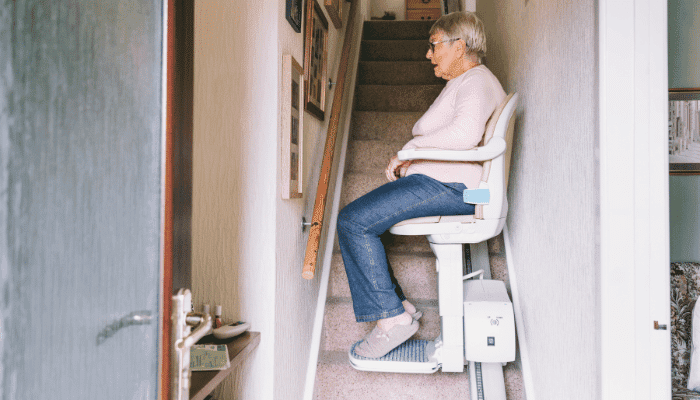
For thousands of Australian families, the stairs in their home are slowly turning into a daily obstacle. An ageing parent or grandparent finds it harder to move between floors.
They avoid the upper level, give up using the bedroom or bathroom upstairs, or worse, suffer a fall on the stairs. At that point, many start asking: are home elevators actually safe for elderly people, or are they just another risky piece of machinery?
The honest answer is: when designed, installed, and maintained properly, home elevators are one of the safest and most reliable ways to keep seniors mobile and independent in their own home. In this practical guide for Australian families, we’ll look at:
- Why stairs are dangerous as people age
- What truly makes a home elevator safe for elderly use
- What safety features any lift for seniors must have in Australia
- How home elevators compare with stairlifts
- Whether seniors can use a lift on their own
- How a good home lift behaves during power failures
- How to choose a trustworthy, premium elevator brand that prioritizes safety above all else
If you are a family member, carer, or architect helping an older person live well at home, this is the clear, no‑hype overview of elderly‑friendly home elevators in the Australian market.
Why Stairs Become Dangerous as People Age
-
High fall risk
Data shows that stairway falls are a leading cause of serious injury among Australians over 65. A small slip or loss of balance on the stairs can result in fractures, head injuries, and long hospital stays.
-
Reduced strength and balance
Age‑related weakness, joint pain (arthritis in knees or hips), and balance issues make each step more taxing and less stable.
-
Reliance on aids
People using walking frames, Zimmer frames, or wheelchairs simply cannot use traditional stairs at all without very close supervision.
-
Loss of independence
When stairs become unsafe, seniors often stop using upper floors entirely. Bedrooms, bathrooms, and living spaces are abandoned, shrinking the usable area of the home.
A safe, well‑designed home elevator removes these risks. It lets the person move between floors confidently, without pain, exhaustion, or constant supervision, and without the need to sell up and move into retirement living just because of the stairs.
What Makes a Home Elevator Safe for Elderly Use in Australia
-
Smooth, controlled movement
The ride should be quiet, steady, and free from jerks, lurching, or strange noises. This is especially important for older adults with balance issues, joint pain, or vertigo.
-
Automatic safety systems that act without human input
The lift should continuously monitor for overloads, overspeed, and obstructions and automatically stop or reverse if needed.
-
Predictable, easy controls
Buttons should be large, well‑lit, clearly marked, and at a comfortable reach. Ideal systems also offer options like one‑touch operation, voice commands, or app control, so someone with limited hand strength or dexterity can still operate the lift easily.
-
A design that works with the home, not against it
The lift should fit into the home with minimal civil work, and its position and doors shouldn’t create new hazards (for example, pulling someone out into a busy corridor or blocking a path).
Must‑Have Safety Features for a Lift for Elderly People in Australia
When comparing home lifts for seniors, families should insist on these core safety features. These are the minimums a reputable Australian brand should provide:
-
Automatic door safety with sensors
A light curtain or safety edges across the door will detect hands, arms, or objects and prevent the doors from closing. This stops painful pinching and prevents a person from being trapped or dragged.
-
Emergency stop buttons and in‑cabin communication
Every elevator for the elderly must have easily reachable emergency stop buttons and a reliable intercom or emergency phone. This ensures help can be called instantly if the lift stops between floors or there is a medical issue.
-
Battery backup / automatic rescue system
In Australian homes, power outages are common in many regions. A safe senior‑friendly lift must have a battery system that either keeps the lift operating or at least automatically moves the cabin to the nearest floor and opens the doors during a power failure.
-
Level landing technology
The cabin should stop perfectly level with the floor at each level, with a very low entry step and non‑slip flooring. Misalignment or a high step is a major tripping risk for older adults.
-
Overload and overspeed protection
The system should detect if the lift is carrying too much weight and prevent it from moving, and if it ever runs too fast, it should activate emergency brakes and safety gear.
-
Automatic return‑to‑floor function (for single‑story starts)
In homes where the lift is mainly used between ground and first floor, a good system will automatically return to the more common stop (e.g., downstairs during the day, upstairs at night) to reduce walking and dragging.
Home Elevator vs. Stairlift: Which Is Safer for Elderly Australians?
Many families in Australia compare home elevators with stairlifts when deciding how to improve mobility for an older parent. Here’s a practical, real‑world comparison:
| Feature | Home elevator | Stairlift |
| Who can use it | Elderly, children, grandchildren, visitors, carers, plus wheelchairs / trolleys | Typically only the elderly person sitting on the chair |
| Mobility if the senior can’t sit | Can be used even if the person can stand but not sit comfortably | Useless if the person cannot sit in the chair |
| Can it carry items (bags, groceries, trolley) | Yes, inside the cabin | Very limited (small items only, if any) |
| Safety during power cuts | With battery backup, it can still move to a safe floor and open doors | Usually stops mid‑flight; some have battery‑assisted return |
| Psychological comfort | Feels like normal part of the home, less “medical” | Can feel like a mobility aid, which some seniors avoid for pride or stigma |
| Long‑term property value | Adds value to the home as a permanent, versatile vertical transport system | Minimal impact on resale value, often removed |
| Maintenance and reliability | Modern drives are very reliable with regular servicing | Motor, rail, and mechanical parts may need more frequent attention |
For most Australian families who want a long‑term, future‑proof, and genuinely safe solution for an ageing parent, a properly specified home elevator is the smarter, safer choice.
Can Elderly People Use Home Elevators Independently and Safely?
Yes, absolutely. In fact, the whole purpose of installing a home elevator for the elderly is to give them independence and peace of mind, not make them more dependent.
Seniors can use a home elevator independently when:
- The controls are simple, large, and easy to see and press.
- The cabin is large enough to enter and exit comfortably, especially if they use a walking frame or wheelchair.
- The ride is smooth, predictable, and quiet, so it doesn’t cause dizziness or anxiety.
- There is a clear routine: get in, press the floor, stay still until the doors open fully, then step out carefully.
With this kind of system, many elderly Australians use the lift on their own throughout the day to move to the bedroom, bathroom, kitchen, or living areas. Some families even keep the lift alarmed or monitored via an app so they are notified of movement, giving extra reassurance without constant supervision.
What Happens When the Power Goes Out?
Power failures are a valid concern in many parts of Australia, and for families with elderly, this is a critical safety issue.
A truly safe home elevator for seniors in Australia must handle power cuts properly:
-
- It should not leave the lift stuck between floors for hours.
- During a power failure, a good system will:
- Continue to move under battery power and bring the cabin to the nearest floor.
Open the doors fully and levelly so the person can step out safely.
Provide emergency lighting and clear instructions inside the cabin.
How to Choose a Safe, Reliable Home Lift Brand in Australia
With so many home lift brands in Australia, it’s easy to be overwhelmed by marketing claims. Families should focus on a few practical questions that reveal real safety and reliability:
- Does the brand design and test its lifts for elderly users as a core use case?
Look for brands that explicitly position their lifts as safe for seniors, not just as a generic product. - What safety standards and certifications does the lift meet in Australia and internationally?
Ask for details about compliance with Australian elevator standards and international safety frameworks (like the Machinery Directive in Europe or similar). - Is the drive system truly battery‑driven and designed for power‑cut resilience?
Some systems just add a small battery for rescue; a better approach is a lift that runs on battery as standard, so it’s inherently more reliable during outages. - Is the brand known for clear, no‑hidden‑charges pricing and long‑term support?
Avoid companies that seem to keep the real cost hidden until the site visit. A premium brand should be transparent about what’s included in safety, installation, and service. - Can the brand demonstrate how the lift is built for smooth, quiet, and consistent operation over many years?
Ask about engineering, materials, and service contracts. A lift that feels solid and predictable is much easier and safer for elderly people to trust.
When a brand is genuinely engineering‑led, safety‑first, and transparent, it stands out clearly from the crowd of “budget” or “me‑too” home lift providers.
Frequently Asked Questions(FAQS)
Yes, modern home elevators properly designed, installed, and maintained are extremely safe for elderly people. They are built with multiple safety systems (automatic brakes, door sensors, battery backup, overload protection) and operate smoothly and predictably, making them a safer option than stairs in most situations.
A lift for seniors must have:
Automatic door safety (light curtains or safety edges).
Emergency stop buttons and in‑cabin communication (intercom or phone).
Battery backup or automatic rescue to return to a safe floor during power failure.
Level landing technology with a low step and non‑slip floor.
Overload and overspeed protection.
Large, easy‑to‑use controls and good lighting inside the cabin.
For most Australian families, a home lift is a better long‑term solution than a stairlift because it:
Can be used by the elderly, children, visitors, and carers.
Works even if the senior cannot sit in a chair.
Can carry groceries, trolleys, or mobility aids.
Keeps the lift functional during power cuts and adds value to the home.
A stairlift can be a lower‑cost option for very simple cases, but a home elevator is generally safer, more versatile, and more future‑proof.
Yes, elderly people can use home elevators independently when:
The lift has simple, large controls.
The cabin is easy to enter and exit.
The ride is smooth, quiet, and predictable.
There is a clear routine for getting in, waiting, and getting out safely.
With the right system, many seniors move between floors on their own all day, without needing constant supervision.
A properly designed home lift for elderly Australians should still work during power failures:
It should have a strong battery system that either keeps the lift running or at least moves it to the nearest floor and opens the doors.
Emergency lighting and communications should remain active.
The lift should not leave the person trapped between floors for long periods.
Cheap or poorly designed lifts may not handle power failures safely, so it’s critical to choose a lift where battery‑driven rescue is a core safety feature, not an after‑thought.


