

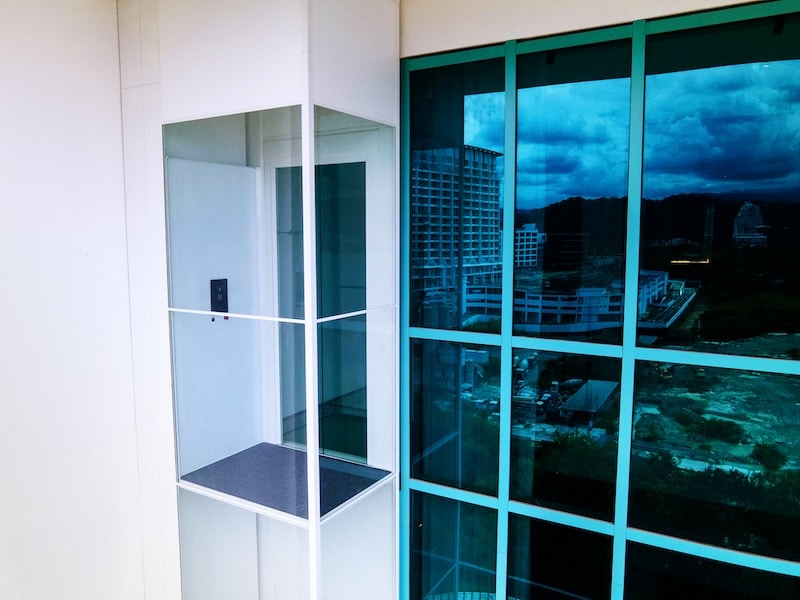
Introduction: Why Do Domestic Elevator Prices Vary So Much?
Search for domestic elevator cost in the UK and you will find figures anywhere from £13,000 to £60,000. Both ends can be accurate, because “domestic elevator” covers very different machines.
A compact platform elevator that plugs into a normal household supply and stands on your floor is a different project from a hydraulic elevator in a purpose-built shaft. On top of the elevator itself come the number of floors, the cabin size, the finishes you choose, the building work your home needs and VAT.
This guide separates each of those costs so you can see where your own project is likely to land. You will find average UK prices, costs by elevator type, floor and cabin size, what design upgrades and installation add, what you will pay to run it, and how VAT relief and grants can lower the total.
TL;DR
- Average cost: most domestic elevators in the UK cost £15,000 to £40,000 installed; premium vacuum and shaft elevators can reach £60,000.
- SWIFT prices: from around £18,100 (Lite) and £19,050 (Pro) for 2 floors, plus about £1,900 per extra floor.
- By type: through-floor £15,000 to £30,000, shaft £25,000 to £50,000, hydraulic £30,000 to £45,000, and vacuum £30,000 to £60,000.
- Cabin size: on SWIFT, all 6 sizes cost almost the same, so size rarely needs to be a budget decision.
- Design upgrades: the SWIFT Pro adds a touch display, more finishes and smart-home integration for about £950 more than the Lite.
- Installation: a screw-driven elevator needs floor openings and a fused spur, with no pit, shaft or machine room.
- Running costs: low electricity use and an annual service contract, with the first year of SWIFT servicing included.
- Help with costs: 0% VAT for eligible disabled people, and a Disabled Facilities Grant of up to £30,000 in England.
What Is the Average Domestic Elevator Cost in the UK?
The average domestic elevator in the UK costs between £15,000 and £40,000 installed, according to the MyBuilder home lift price guide. One UK installer reports that most homeowners settle between £20,000 and £35,000, with luxury and custom-engineered models passing £50,000 (Morgan Ellis).
Budget band |
What it typically buys |
| Under £20,000 | A compact 2-floor through-floor or platform elevator in a standard finish |
| £20,000 to £35,000 | A 2- to 4-floor enclosed platform elevator, or a through-floor lift with building work |
| £35,000 to £60,000+ | Hydraulic, traction or vacuum elevators, often in a built shaft or with bespoke finishes |
A SWIFT domestic elevator sits at the accessible end of this market: from around £18,100 for a 2-floor SWIFT Lite and £19,050 for a 2-floor SWIFT Pro. With a third or fourth floor, both still sit within the middle band.
Remember that published figures are usually “from” prices for the elevator. Your project total also includes building work, electrics, approvals and VAT, which are covered further down.
How Much Does Each Type of Domestic Elevator Cost?
The drive system and the building work it needs set most of the price. Screw-driven platform elevators and through-floor lifts sit at the lower end; hydraulic, traction and vacuum elevators sit higher.
Elevator type |
Typical UK cost |
Building work |
Floors |
| Open platform lift (short travel) | £13,000 to £20,000 | Minimal | Split levels or 1 floor |
| Through-floor lift | £15,000 to £30,000 | Ceiling aperture | 2 |
| Enclosed screw-driven platform elevator (SWIFT) | From £18,100 for 2 floors | Floor openings; no pit, shaft or machine room | 2 to 6 |
| Shaft-based (traction) elevator | £25,000 to £50,000 | Built shaft, pit | 3 or more |
| Hydraulic elevator | £30,000 to £45,000 | Pit, shaft, machine space | 2 or more |
| Vacuum (pneumatic) elevator | £30,000 to £60,000 | Floor openings | Varies by model |
Ranges for types other than SWIFT are from a UK installer’s 2025 price guide.
The types also differ in what you get for the money. A through-floor lift usually serves just 2 floors. A vacuum elevator looks striking but usually has a small round cabin. Hydraulic and traction elevators are smooth and fast but bring the cost and disruption of a pit and shaft.
An enclosed, screw-driven platform elevator like SWIFT serves up to 6 floors, carries up to 5 people or a wheelchair, and needs none of that heavy building work, which is why it often gives the most elevator for the money in an existing UK home.
How Does the Number of Floors Affect My Cost?
Every extra floor adds a landing door, more shaft and a longer drive. On a SWIFT domestic elevator, each floor beyond the first 2 adds about £1,900.
Floors served |
SWIFT Lite (approx.) |
SWIFT Pro (approx.) |
| 2 (ground + 1) | £18,100 | £19,050 |
| 3 | £20,000 | £20,950 |
| 4 | £21,900 | £22,850 |
| 5 | £23,800 | £24,750 |
| 6 | £25,700 | £26,650 |
Total travel matters too. The SWIFT Lite travels up to 15 metres and the SWIFT Pro up to 20 metres, enough for most UK townhouses with a basement and loft.
Building work also scales with floors, because each level needs its own opening and making good. If you might convert a loft or basement later, tell your surveyor now so the elevator can be planned to reach it.
How Does Cabin Size Affect My Elevator Cost?
On a SWIFT domestic elevator, cabin size makes very little difference to the price. All 6 sizes, from XXS to XL, are available on both the Lite and Pro models at close to the same cost.
Size |
Cabin floor (mm) |
Rated load |
Best for |
| XXS | 830 × 600 | 250 kg / 2 people | Very tight spaces, 1 walking user |
| XS | 830 × 850 | 250 kg / 3 people | Walking users with a stick or frame |
| S | 830 × 1000 | 250 kg / 3 people | Couples, shopping, luggage |
| M | 830 × 1100 | 250 kg / 3 people | A seated user, rollator or pushchair |
| L | 1200 × 1000 | 400 kg / 5 people | Many wheelchair users, families |
| XL | 1400 × 1100 | 400 kg / 5 people | A wheelchair user plus a companion |
Where size can affect your budget is the building work. A larger cabin needs a larger floor opening, which may cut across more joists and need more support and making good.
Because the elevator price barely changes, choose the size you will need in 10 years, not the smallest that fits today. Replacing a small elevator later costs far more than choosing a larger cabin now. For dimensions and footprints, see our guide to domestic lift sizes.
How Much Will Design Upgrades Add to My Cost?
On SWIFT, the biggest design upgrade is choosing the Pro over the Lite, which adds about £950 to the 2-floor price. Smaller options are priced individually on your quote.
Feature |
SWIFT Lite |
SWIFT Pro |
| 2-floor price (approx.) | £18,100 | £19,050 |
| Controls | Touch buttons | 15.4-inch touch display with user profiles |
| Shaft colours | 3 (Traffic White, Jet Black, Gold) | 5 (adds Grey White and Anthracite Grey) |
| Back wall | Image Bond White ArtWall | 12 interchangeable ArtWall themes |
| Flooring | Vinyl Black; Ege carpet optional | 7 Ege ECONYL® carpets |
| Cabin lighting | White LED | Adjustable warm-to-cool LED, RGB optional |
| Doors per floor | 1 | Up to 2 |
| Emergency phone | Optional | Included |
| Smart-home integration | Not available | Optional |
Options available on either model include a top lid for the shaft, a backside cover, a ventilation fan or air-conditioning preparation, and SWIFT Remote monitoring. Ask for each to be listed separately on your quote.
Both models share the same drive, battery backup, safety system and 6 cabin sizes, so the upgrade is about look, feel and convenience rather than safety. If the elevator is mainly practical, the Lite is excellent value. If it will be a feature of your home, or several people with different needs will use it, the Pro’s display and finishes are worth considering.
How Much Will My Elevator Installation Cost?
For a screw-driven elevator like SWIFT, installation costs come from 4 places: the floor openings, the electrical supply, approvals and the assembly itself. There is no pit, shaft or machine room to pay for.
Cost |
What it covers |
What to expect |
| Builder’s work | Cutting and trimming each floor opening, then making good | Depends on floor type; timber joists are simplest, concrete costs more |
| Electrical work | A dedicated fused spur (single-phase, 8 A fuse) | A short job for a qualified electrician |
| Building control | Approval for the structural and fire-safety side of the opening | Set by each council; for example about £609 in Woking for internal work costing £5,000 to £25,000 |
| Planning permission | Only for external elevators or extensions | £548 for a householder application in England |
| Listed building consent | Internal work to a listed home | No application fee in England |
| Assembly and commissioning | Building the shaft, doors and cabin, then testing | Usually 2 to 5 working days on site |
Ask your lift supplier for a drawing after the survey, then ask your builder for a fixed price against it. Check whether your elevator quote already includes delivery, installation and commissioning, so nothing is counted twice or missed.
SWIFT elevators must be installed and commissioned by SWIFT or an appointed partner, and the warranty becomes valid only after a successful commissioning test.
What Will My Domestic Elevator Cost to Run?
A domestic elevator is cheap to run. Your yearly costs are a service contract and a small amount of electricity.
- Electricity: a SWIFT elevator draws a maximum of 900 W, and SWIFT compares its energy use to an A-rated dishwasher. The battery charges between trips from a standard single-phase supply.
- Servicing: the first year is included. After that, SWIFT annual service plans typically cost £300 to £500, carried out by SWIFT or an appointed local partner.
- Warranty protection: the 5-year elevator warranty and 10-year drive warranty stay valid only while the service contract is active. A lapsed contract means a paid technical inspection before a new one can start.
- Fewer extra costs: no oil changes, automatic lubrication and optional SWIFT Remote monitoring help avoid call-outs.
- Wear items: LED lights, normal wear and tear and damage from misuse are not covered by the warranty, so keep a small allowance.
If your elevator was installed at 0% VAT for an eligible disabled person, repairs and maintenance can also be zero-rated.
Can I Get Financial Help With My Elevator Cost?
Yes, if the elevator is for a disabled person. Two schemes can reduce the cost significantly.
0% VAT: HMRC zero-rates the installation of a lift in a disabled person’s private residence, along with the goods supplied with it, when the lift helps them move between floors. You sign an eligibility declaration and pay 0% VAT instead of 20%, which saves £4,000 on a £20,000 project. Repairs and maintenance can then be zero-rated too. The relief does not apply to older people who are not disabled, or to temporary injuries.
Disabled Facilities Grant (DFG): your local council can fund home adaptations for a disabled person, including elevators. It is means-tested, except for disabled children under 18.
Nation |
Maximum grant |
| England | £30,000 |
| Wales | £36,000 |
| Northern Ireland | £25,000 |
| Scotland | No DFG; ask your council about its Scheme of Assistance |
Apply and get approval before any work starts, because councils cannot fund work already begun. Some councils also offer discretionary grants or loans to top up a DFG or cover your contribution.
How Can I Lower My Domestic Elevator Cost?
The choices you make before the survey save the most money. These 7 steps lower your domestic elevator cost without cutting corners on safety:
- Choose a drive that avoids a pit and shaft. A screw-driven platform elevator removes the most expensive building work.
- Pick the Lite if the elevator is mainly practical. It has the same drive, battery backup and safety system as the Pro for about £950 less.
- Use an existing void. A stairwell void or stacked cupboards often need less cutting and making good.
- Line the opening up with the joists. A position parallel to the joists usually needs less structural work.
- Arrange VAT relief and grants first. Both must be in place before work starts.
- Time it with other building work. Making good costs far less if you are already renovating or redecorating.
- Compare total cost of ownership. A longer warranty and lower running costs can outweigh a cheaper headline price; SWIFT offers 5 years on the elevator and 10 on the drive.
Conclusion: How Should I Budget for My Domestic Elevator?
Budget for the full project, not the starting price. A realistic domestic elevator budget has 3 parts.
- The elevator: from around £18,100 (SWIFT Lite) or £19,050 (SWIFT Pro) for 2 floors, plus about £1,900 per extra floor and any options you choose.
- Getting it in: builder’s work for the floor openings, an electrician’s fused spur, building control fees and a 10% contingency for surprises in floors and ceilings.
- Keeping it running: a small amount of electricity and an annual service contract from year 2.
Then subtract what you may be entitled to: 0% VAT for an eligible disabled person and a Disabled Facilities Grant of up to £30,000 in England.
A free home survey turns these estimates into a firm, itemised quote. Build your elevator online to compare models and finishes, or contact the SWIFT UK team to book your survey.
FAQs
1. Is a domestic elevator more expensive than a stairlift?
Yes, upfront. A straight stairlift typically costs £2,000 to £4,000 and a curved one £4,500 to £8,000 or more, according to Which?. A domestic elevator starts from around £18,100 for 2 floors. The elevator does more for the money, though: it carries a wheelchair and more than one person, keeps the stairs clear and can serve up to 6 floors. If mobility is likely to decline, it can avoid paying for a stairlift now and an elevator later.
2. Does a pneumatic elevator cost more than a screw-driven one?
Usually, yes. Vacuum (pneumatic) elevators typically cost £30,000 to £60,000 in the UK, while a screw-driven SWIFT elevator starts from around £18,100 for 2 floors. Screw-driven elevators also offer larger, rectangular cabins in sizes that suit wheelchairs, while pneumatic models usually have a smaller round cabin.
3. How long will my domestic elevator last for the price?
A well-maintained modern home elevator is typically built to last 20 to 25 years. Spread over 20 years, a £19,050 SWIFT Pro works out at under £1,000 a year before running costs. SWIFT backs its drive with a 10-year warranty and the elevator with 5 years, provided it is serviced under contract.
4. Will a domestic elevator add value to my home?
It can broaden your home’s appeal, especially to older buyers, wheelchair users and multi-generational families looking for step-free access to every floor. You may not recover the full cost in the sale price, so the stronger reason to invest is being able to keep living in your whole home for longer.
5. Is a second-hand domestic elevator worth buying?
Rarely. A used elevator usually needs dismantling, adapting to your floor heights, reinstalling and recommissioning by a qualified engineer, which can eat up most of the saving. It may no longer match its original Declaration of Conformity, spare parts may be hard to find, and it normally comes with no manufacturer warranty. The exception is buying a house that already has a SWIFT elevator: the warranty can transfer to you for its remaining period, as long as the service requirements are met.
Get in Touch!