

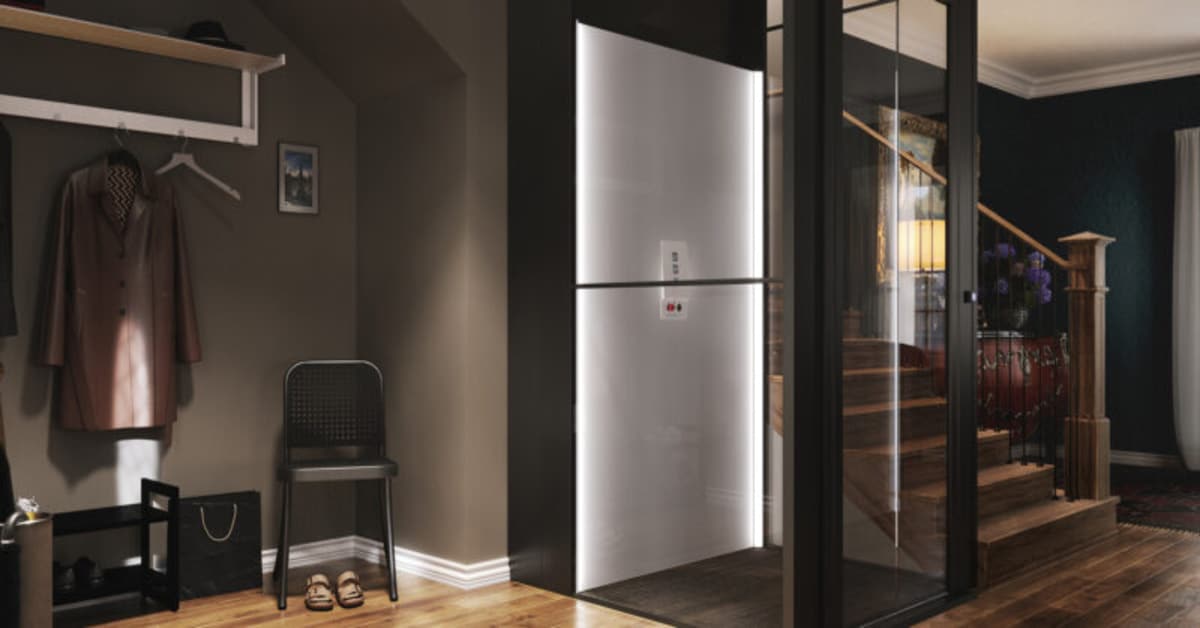
Most Indian homes weren’t built with lifts in mind. Whether you live in a 25-year-old independent house in Pune, a compact builder floor in Bangalore, or a narrow 3-story structure in Chennai, the challenge is the same: limited space, tight staircases, and the growing realization that your parents (or you) need easier access between floors.
The good news? Small home lifts have evolved significantly. Modern compact lifts can fit into spaces you’d never imagine, work without complex construction, and cost far less than you’d expect. But the market is flooded with confusing options, vague specifications, and dealers who either oversell expensive solutions or undersell capabilities to close a quick deal
Let’s cut through the noise and discuss what actually works for typical Indian homes, what “small” really means in practical terms, and how to choose a lift that fits your space, budget, and family needs without tearing your house apart
What Does “Small” Actually Mean in Home Lifts?
When Indian homeowners search for “small lift for home,” they usually mean one of three things: small footprint, low height requirement, or compact enough to retrofit without major construction. Many also consider a lift for elderly at home, designed to provide safe, easy, and reliable mobility for senior family members. Let’s clarify what the industry considers compact.
Standard Small Lift Dimensions
Most small home lifts designed for Indian houses have cabin sizes between 800mm x 800mm (2.6 ft x 2.6 ft) to 1000mm x 1100mm (3.3 ft x 3.6 ft). To put this in perspective, that’s roughly the size of a small bathroom or a large cupboard. Compare this to commercial building lifts at 1500mm x 1500mm and you see the difference
Load Capacity for Small Lifts
Compact home lifts typically handle 200 kg to 340 kg. Before you worry that sounds insufficient, consider this: 200 kg comfortably accommodates 2 adults, 250 kg fits 2-3 people, and 340 kg handles 4 people or 2 people plus a wheelchair and some groceries. For a typical Indian family with elderly parents, 250 kg is perfectly adequate
Pit and Overhead Requirements
Here’s where things get interesting. Traditional lifts need a pit (underground space below ground floor) of 1000-1500mm and overhead clearance of 3500-4000mm. Modern small lifts, especially battery-driven models, work with minimal or zero pit depth and just 2700-3000mm overhead clearance. This is crucial for retrofitting in existing Indian homes where digging a deep pit means breaking floors, affecting foundations, and spending lakhs on civil work
SWIFT’s compact models, for instance, operate with zero pit requirement and can work with ceiling heights as low as 2750mm, making them ideal for older Indian constructions where floor-to-floor height is typically 2900-3100mm
Small Lift Technologies: What Actually Works in Indian Homes
The lift industry loves technical jargon, but for Indian homeowners, it boils down to three practical options
Battery-Driven Platform Lifts
How they work: The lift cabin moves on a self-supporting aluminum frame using battery-powered motors. No oil, no heavy machinery, no complex cable systems
Space requirement: As little as 900mm x 900mm floor space
Installation complexity: Low. Typically 3-5 days with minimal structural modifications
Best for: G+1 and G+2 homes (ground plus one or two floors), elderly parents, homes with unpredictable power supply
Typical cost: ₹18-22 lakhs for G+1 to G+2
SWIFT specializes in this technology with models specifically engineered for Indian home dimensions. Their compact battery lifts fit into spaces where traditional lifts simply cannot be installed, and the 4-day power backup means your parents aren’t stranded during power cuts (a real concern in tier 2 and tier 3 cities). For smaller residences, a single floor home lift provides a simple, cost-effective solution without compromising on safety or convenience.
Screw-Driven (Spindle) Lifts
These use a rotating screw mechanism to move the cabin up and down. Popular in Europe, they’ve found a niche in India for homes with extremely tight spaces
How they work: A nut attached to the cabin moves along a rotating screw shaft
Space requirement: Can work in spaces as small as 850mm x 850mm
Installation complexity: Moderate. Requires 4-6 days installation
Best for: Ultra-compact installations, homes where even 900mm footprint is challenging
Typical cost: ₹16-24 lakhs depending on floors
Reality check: Screw-driven lifts are slower (0.10-0.15 m/s vs 0.15-0.20 m/s for battery-driven) and can be noisier during operation. In Indian heat conditions, the mechanical components need more frequent maintenance
Hydraulic Compact Lifts
These are miniaturized versions of commercial hydraulic lifts, designed for home use
How they work: Hydraulic cylinder pushes the cabin platform up, controlled by an oil pump
Space requirement: Minimum 1000mm x 1000mm plus machine room space
Installation complexity: High. Requires 7-12 days, pit excavation (usually 1000-1200mm), machine room for pump and controls
Best for: G+2 and G+3 homes with space for proper installation, areas with stable power
Typical cost: ₹14-20 lakhs plus civil work (₹2-4 lakhs extra)
Reality check: While initially cheaper, the civil work costs, annual oil servicing (₹8,000-12,000), and need for separate power backup (₹50,000-70,000) quickly add up. In compact Indian homes, finding space for the machine room and digging the pit often proves impossible without major reconstruction
What Works Best for Typical Indian Floor Plans
Let’s get specific with common scenarios
Compact Independent House (100-150 sq yard plot)
Common in cities like Delhi, Jaipur, Lucknow. These homes typically have a central staircase consuming about 40-50 sq ft per floor. Side or corner space is limited
Best solution: Battery-driven compact lift installed adjacent to staircase or in a corner. SWIFT’s 900mm x 900mm model fits perfectly, requires no pit, minimal structural work
What doesn’t work: Hydraulic lifts need too much excavation. Screw lifts work but offer less capacity
Real example: A homeowner in Jaipur’s Malviya Nagar installed a SWIFT compact lift in a 120 sq yard G+2 house, fitting it in a 3ft x 3ft corner space previously used for storage. Total installation time: 4 days. No floor breaking required
Builder Floor (125-200 sq yard)
Common in Bangalore, Pune, Chandigarh. Usually G+2 or G+3 with standardized layouts. Some newer constructions (post-2015) have lift shaft provisions, but most older ones don’t
Best solution: If pre-existing shaft exists, any technology works. Without shaft, battery-driven lifts excel because they’re self-supporting and don’t need a separate machine room
What doesn’t work: Retrofitting hydraulic systems in older builder floors means disturbing 2-3 floors simultaneously for pit and machine room construction
Real example: A Bangalore Koramangala builder floor (built 2008) had no lift provision. The family installed a SWIFT Pro model (1000mm x 1100mm cabin) fitting the lift structure adjacent to the staircase well. Capacity of 340 kg means it handles the elderly couple plus their daughter visiting with a baby stroller comfortably
Narrow Multi-Story House (60-100 sq yard plot)
Common in older parts of Mumbai, Kolkata, Chennai, Ahmedabad. These are typically G+3 or G+4 structures built on extremely narrow plots with tight internal spaces
Best solution: This is genuinely challenging. Battery-driven compact lifts with 800-900mm footprint are often the only viable option. Alternatively, external lift installation (on building exterior) if municipal permissions allow
What doesn’t work: Almost all traditional solutions fail due to space and structural constraints
Real example: A Chennai Mylapore home on a 75 sq yard plot (G+3) had virtually no internal space. The family installed an external compact lift on the rear side of the building. Required municipal permission but solved the problem without internal modifications
Busting Common Myths About Small Home Lifts
Myth 1: Small lifts are unsafe for elderly users
Reality: Modern compact lifts often have better safety features than larger commercial lifts. Battery-driven models have automatic door sensors, emergency stop buttons, battery backup (crucial for elderly users who might get trapped during power cuts), and smooth acceleration/deceleration. SWIFT’s compact models include emergency communication systems and can operate for 4 days without power, ensuring elderly users are never stranded
Myth 2: You can’t fit a wheelchair in a small lift
Reality: A standard wheelchair is about 600mm wide. A 900mm x 900mm cabin accommodates a wheelchair plus one attendant comfortably. The 1000mm x 1100mm cabin (SWIFT Pro) fits a wheelchair plus two people easily
Myth 3: Small lifts can’t carry groceries or household items
Reality: A 250 kg capacity lift handles 2 adults (approximately 130-140 kg) plus 110-120 kg of additional weight. That’s more than enough for monthly grocery shopping trips or moving furniture between floors. The 340 kg capacity lifts handle even more
Myth 4: Installing a small lift means breaking the entire house
Reality: Only outdated hydraulic technology requires extensive excavation and construction. Modern battery-driven lifts like SWIFT’s models install with minimal structural modifications. The lift structure is self-supporting, requiring only anchor points on walls and floors. Most installations complete in 3-5 days with dust and disruption limited to the immediate installation area
Myth 5: Small lifts need constant maintenance
Reality: This depends entirely on the technology. Hydraulic lifts (even compact ones) need annual oil servicing, pump maintenance, and regular checks. Battery-driven lifts have far fewer moving parts, no oil or fluids, and typically need only annual safety inspections. SWIFT’s battery lifts include the first year of maintenance, and thereafter costs are about ₹12,000-15,000 annually versus ₹22,000-32,000 for hydraulic systems
Installation Considerations for Indian Homes
Before you finalize any lift, consider these practical factors that sellers often gloss over
Structural Load Capacity
Indian homes built before 2000 often used lower-grade concrete and less reinforcement than modern constructions. Before installing any lift, get a structural engineer’s assessment. This costs ₹10,000-18,000 but is essential. Lightweight battery-driven lifts impose less structural load than heavy hydraulic systems, making them suitable for older constructions
Floor to Floor Height Variations
Many older Indian homes have irregular floor heights. The ground floor might be 3000mm, first floor 2900mm, and second floor 3100mm. Variable floor height handling is crucial. SWIFT’s systems automatically adjust to varying floor heights without manual calibration, a feature missing in many budget lifts
Electrical Supply Stability
Cities like Bangalore and Mumbai have relatively stable power. But in Jaipur, Lucknow, Patna, Bhubaneswar, and most tier 2 cities, power cuts are routine. A lift that requires continuous electricity plus a separate inverter setup adds ₹50,000-80,000 to your cost. Battery-driven lifts eliminate this entirely
Monsoon and Humidity Factors
Coastal cities (Mumbai, Chennai, Kochi, Kolkata) and high-humidity regions face corrosion issues with lifts using exposed metal components and hydraulic fluids. Battery-driven systems with sealed components handle humidity better. The absence of hydraulic oil means no fluid degradation in extreme temperatures
Permissions and Society Approvals
Independent houses usually need municipal building department approval. In gated communities or apartment complexes, society NoC is mandatory. SWIFT provides documentation support as part of their installation package, helping homeowners navigate these bureaucratic processes. Many clients also consult on lift direction as per vastu to ensure the elevator’s placement aligns with traditional energy principles and promotes positive flow within the home.
Small Home Lift Cost Reality for Indian Buyers
Let’s establish honest price expectations for small home lifts in India
Battery-Driven Compact Lifts (2-3 person capacity)
G+1 configuration: ₹19,00,000 to ₹20,00,000 including installation, GST extra
G+2 configuration: ₹21,00,000 to ₹22,00,000 including installation, GST extra
Each additional floor: +₹2,00,000
What’s included: Complete lift, installation, battery backup, first year maintenance, permission assistance
What’s extra: Only GST (18%) and any extraordinary structural modifications if your building needs reinforcement
Screw-Driven Compact Lifts
G+1 configuration: ₹16,00,000 to ₹19,00,000
G+2 configuration: ₹18,00,000 to ₹22,00,000
Higher maintenance costs and slower operation should factor into the decision
Hydraulic Compact Lifts
Base lift: ₹12,00,000 to ₹16,00,000
Civil work (pit, machine room): +₹2,00,000 to ₹4,00,000
Power backup system: +₹50,000 to ₹70,000
Total realistic cost: ₹15,00,000 to ₹21,00,000 for G+2
Annual maintenance: ₹22,000-32,000 (higher than battery-driven)
The initial price difference narrows significantly when you account for total installation costs and 5-year ownership expenses. SWIFT’s battery-driven lifts, while appearing costlier upfront, eliminate civil work expenses and backup system costs, making the total investment competitive while delivering superior technology
Why SWIFT Works Particularly Well for Small Indian Homes
Several factors make SWIFT’s approach ideal for space-constrained Indian homes
Zero Pit Requirement: This alone saves ₹1,50,000 to ₹3,00,000 in excavation and civil work costs. For older homes, avoiding foundation disturbance eliminates structural risk entirely
Compact Footprint: The 900mm x 900mm Lite model fits spaces where traditional lifts cannot. The 1000mm x 1100mm Pro model provides more capacity without demanding excessive space
Self-Supporting Structure: No need for a separate machine room. In compact Indian homes where every square foot matters, this is invaluable
4-Day Battery Backup: Built-in, not an add-on purchase. For Indian families with elderly members, this isn’t a luxury feature; it’s essential safety
Fast Installation: 3-5 days versus 2-3 weeks for hydraulic systems means less disruption to your daily life. You’re not living through weeks of construction dust and noise
Solar Compatibility: With rooftop solar becoming common in Indian homes (government subsidies help), the ability to charge your lift from solar panels offers long-term operational cost savings
Pan-India Service Network: SWIFT has established service presence in major Indian cities with 24–48 hour response commitments. When you need service, you get it—no excuses about “technician coming from another city.” If you’re budgeting your project, understanding the lift price in Delhi NCR helps you plan accurately for installation, maintenance, and any additional floors.
A Pune homeowner recently shared: “We have a 140 sq yard house, G+2. Every lift company said we’d need massive civil work. SWIFT installed their compact lift in the corner space near our staircase. Four days start to finish. My 71-year-old father now moves between floors independently. That freedom? Priceless.”
Making the Right Choice for Your Home
Small home lifts are no longer a luxury for Indian families; they’re increasingly a necessity as our parents age and we plan for our own mobility needs 15-20 years from now. The question isn’t whether to install one but which technology makes sense for your specific space, family needs, and budget
Focus on these priorities: space efficiency without compromising safety, transparent pricing without hidden civil work costs, reliable power backup for Indian electricity conditions, and low maintenance requirements that don’t turn into recurring headaches
When you evaluate options, visit completed installations, speak to homeowners who’ve lived with the lift for 1-2 years, and insist on understanding the complete installed cost before deciding. The cheapest upfront quote often becomes the most expensive ownership experience
Frequently Asked Questions
The absolute minimum space for a functional home lift is approximately 800mm x 800mm (2.6 ft x 2.6 ft) floor area. However, for comfortable usage by 2-3 people or accommodating a wheelchair, 900mm x 900mm (3 ft x 3 ft) is more practical. SWIFT’s compact Lite model works perfectly in this size, offering 250 kg capacity. The Pro model at 1000mm x 1100mm provides 340 kg capacity in slightly more space. Beyond floor space, you need adequate overhead clearance. Traditional lifts require 3500-4000mm, but modern battery-driven lifts like SWIFT work with just 2750-3000mm overhead, making them suitable for older Indian homes with lower ceiling heights. Remember, these dimensions are for the lift cabin. The supporting structure adds minimal space, typically 100-150mm on each side.
Absolutely, and often safer than larger commercial lifts. Modern small home lifts include multiple safety features specifically designed for elderly users: automatic door sensors preventing closure if someone is in the doorway, smooth start and stop mechanisms eliminating jerky movements, emergency stop buttons at accessible heights, non-slip flooring, grab rails inside the cabin, and emergency communication systems. The critical safety feature for elderly users in India is power backup. SWIFT’s battery-driven lifts operate for 4 days without electricity, ensuring elderly family members never get trapped during power cuts (a real concern in many Indian cities). Additionally, the smaller cabin size means less distance to grab rails if balance is an issue, and the compact space feels less intimidating for users uncomfortable with larger lifts.
Yes, modern battery-driven home lifts can be installed with zero pit depth, which is revolutionary for Indian homeowners. Traditional hydraulic lifts require pits of 1000-1500mm depth, meaning you must excavate below the ground floor, break flooring, potentially disturb the foundation, and spend ₹1.5-3 lakhs on civil work alone. SWIFT’s battery-driven technology eliminates this entirely. The lift sits on the existing floor level, using a self-supporting structure that doesn’t need underground components. This makes installation in existing homes far simpler, faster (3-5 days vs 2-3 weeks), and cheaper. The only minor consideration is that the ground floor entrance might have a small ramp (50-75mm) if your floor is perfectly level. For most homes, this is invisible in practical use and far preferable to major excavation work.
Mini or small home lifts typically have capacities between 200 kg and 340 kg, which is more than adequate for residential use. To put this in perspective: 200 kg accommodates 2 average adults (approximately 130 kg) plus 70 kg of additional weight (groceries, luggage), 250 kg fits 2-3 people comfortably or 2 people plus a wheelchair, and 340 kg handles 4 people or 2 people with a wheelchair plus attendant and belongings. SWIFT’s Lite model offers 250 kg capacity, suitable for most families with elderly parents. The Pro model provides 340 kg capacity, ideal if you frequently need to transport furniture between floors, have wheelchair requirements, or simply want more space and capacity. For comparison, commercial building lifts have 600-800 kg capacity, but in a home setting, this is unnecessary and would require significantly more space and structural support.


