

What is the Speed of a Domestic Lift?
A domestic lift is intentionally designed to travel at a slower speed than commercial elevators to prioritize safety, comfort, and smooth operation inside a home. Most home lifts, including SWIFT home lifts, operate at a maximum speed of 0.15 m/s, which complies with European regulations for residential platform lifts. This speed is ideal for moving between floors in a private residence, providing a quiet, stable, and comfortable ride while minimizing energy consumption and mechanical wear.
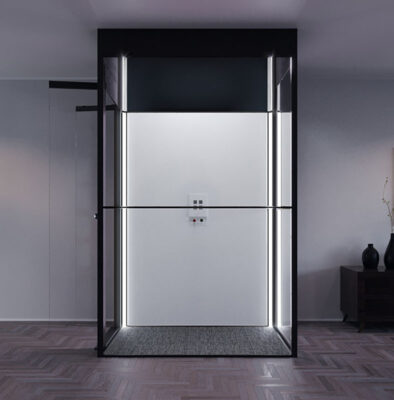
For most homes, a speed of 0.15 m/s is ideal because it provides a smooth, quiet, and comfortable ride while meeting residential safety requirements. Technologies such as screw-driven and platform lifts are specifically engineered for low-rise homes, where reliability, energy efficiency, and user comfort are more important than high-speed travel.
Why Are Home Lifts Intentionally Slower?
Unlike elevators in office towers or shopping centres, residential lifts only need to travel short distances between a few floors. Higher speeds would provide little practical benefit while increasing complexity, energy usage, and installation requirements. A slower lift speed offers several advantages:- Improved safety for children, older adults, and people with reduced mobility.
- Smoother starts and stops, reducing sudden movements and enhancing ride comfort.
- Lower noise and vibration levels, making the lift more suitable for residential environments.
- Reduced wear on components, helping extend the lifespan of the lift.
- Greater energy efficiency, especially in battery-powered home lift systems.
What Is the Typical Speed of a Domestic Lift?
Most domestic lifts, including SWIFT home lifts, travel at a maximum speed of 0.15 m/s, which complies with European regulations for residential lifts. This speed is intentionally designed to provide a safe, smooth, and comfortable ride between floors. Unlike commercial elevators that prioritize speed, home lifts focus on passenger comfort, reduced noise, improved safety, and lower energy consumption. The slower travel speed also reduces wear on components, helping ensure long-term reliability and minimal maintenance.Components That Influence Elevator Speed
1. Drive System
Traction elevators—especially with gearless motors—achieve higher speeds than hydraulic or screw-driven systems due to reduced resistance.2. Motor Power & Control
More powerful motors and advanced controls like VVVF (Variable Voltage Variable Frequency) allow smoother acceleration and higher speeds, improving comfort.3. Counterweight Balance
In traction systems, a well-balanced counterweight lessens motor load and supports faster, more efficient travel.4. Building Height
Taller buildings often require high-speed elevators to cover large vertical distances quickly, especially in commercial or high-traffic environments (high-speed elevator applications).5. Safety Regulations
Even if the system is capable of higher speeds, regulatory limits and safety compliance determine the actual average speed of an elevator.How to Calculate Elevator Speed
To determine the average elevator speed, measure the vertical travel distance between floors and time how long it takes. Use the formula:
This gives a clear insight into the elevator’s actual speed performance (e.g., m/s or ft/min), useful when comparing specs or planning new installs.
For more on how elevator speed impacts user experience and home mobility solutions, check out SWIFT Pro’s advanced features and performance details.
Domestic Lift Speed by Lift Technology
Different lift technologies operate at different speeds depending on their design and intended use. For residential applications, comfort and safety are generally prioritized over speed.| Lift Technology | Typical Speed |
|---|---|
| Screw-Driven Lift | 0.15 m/s |
| Platform Lift | 0.15 m/s |
| Hydraulic Home Lift | 0.15–0.3 m/s |
| Pneumatic Vacuum Lift | 0.15–0.3 m/s |
| Traction Home Lift | 0.3–1.0 m/s |
| Commercial Passenger Lift | 1–10 m/s |


