

There is a particular kind of frustration that comes with living in a home you love but cannot fully use.
For millions of people across the UK, especially those living in Victorian terraces, Edwardian semis, and 1970s townhouses, the staircase between ground floor and first floor has quietly become the most significant barrier in their daily lives. Whether the cause is age, injury, a progressive condition, or simply the practical reality of a growing family that includes elderly relatives, the question eventually becomes the same: what is the best way to move between floors without rebuilding the entire house?
The through floor home lift has become one of the most searched and most installed solutions in the UK residential market, and for very good reason. It offers genuine vertical mobility between floors, works in homes where a full shaft installation would be disproportionate, and suits the compact layouts of the terraced and semi-detached houses that make up the majority of Britain’s housing stock. This guide covers everything you need to know about through floor lifts in the UK in 2026, from how they actually work, to what Building Regulations say, to what they cost and how they compare to a stairlift for older homeowners.
What Is a Through Floor Lift and How Does It Work?
A through floor lift, sometimes written as a through-the-floor lift or referred to more broadly as a domestic home lift, is a compact vertical platform or enclosed cabin that travels between two floors by passing through an aperture cut into the ceiling of the lower level and the floor of the upper level. The user steps or wheels onto the platform at ground floor level, operates the controls, and the lift rises through the opening to deliver them directly to the floor above.
The mechanism can vary depending on the brand and model chosen. Some through floor lifts use a self-supporting rail system where the unit carries its own structural weight without needing to be fixed to load-bearing walls. Others use screw and nut drive systems, traction cables, or hydraulic pistons. The best modern residential through floor lifts use electric drive mechanisms that do not require a separate machine room, do not need hydraulic fluid, and operate on a minimal pit depth. These machine-room-less designs are increasingly the standard for any quality residential installation.
The defining characteristic of a through floor lift is its relatively contained footprint. Unlike a full enclosed shaft lift, a standard through floor model can be installed in a modest footprint, typically fitting within the space of a standard doorway or slightly larger. The opening cut into the floor is sealed around the lift with a guard enclosure or collapsible gate at each level, ensuring safety when the lift is not in use. When the lift descends, the upper floor opening closes over, leaving the floor usable and accessible for other household members.
How a Through Floor Lift Differs from a Stairlift and a Full Home Lift Shaft
This distinction matters enormously because the three options serve different needs and suit different home layouts.
A through floor lift is the next step up. It is designed for users who cannot safely transfer to a stairlift seat, who use a powered wheelchair or scooter, or who simply want a more dignified and effortless way to move between floors without navigating a staircase mechanism at all. The user remains on their feet or in their chair and the platform or cabin does the work entirely. The structural intervention is moderate and focused: an aperture through the floor and ceiling between two levels.
A full home lift within a dedicated shaft is the premium end of the residential lift market. It provides an enclosed cabin that travels between multiple floors within a structural or purpose-built enclosure. It is larger, more aesthetically refined, and suited to homes where travel between three or more floors is required or where the homeowner wants the most complete and integrated solution. The civil engineering involved is more significant, and the cost is correspondingly higher.
For UK homes where the primary need is to move between two floors, the through floor lift hits a practical sweet spot between the simplicity of a stairlift and the scope of a full shaft installation.
Building Regulations and What They Require for Through Floor Lifts
Building Regulations approval is required for through floor lift installations in the UK. This is not optional and it is not the same as planning permission. Building Regulations concern themselves with structural safety, electrical safety, fire safety, and accessibility standards. A through floor lift installation involves cutting through a structural floor, introducing an electrical system, and creating an opening that affects the fire compartmentation of the building. All of these elements fall squarely within the scope of Building Control.
The provision of lift services within a property falls under several key elements of legislation and guidance, including the Equality Act 2010, Part M of the Building Regulations, the Lifting Operations and Lifting Equipment Regulations 1998, and British Standard BS 8300-2:2018.
Part M, or Approved Document M, governs access to and use of buildings. For domestic through floor lift installations, the relevant considerations include the minimum platform dimensions for accessibility, clear door widths, and the suitability of controls for users with limited dexterity. Any quality through floor lift installer should be well versed in these requirements and should manage the Building Control submission on your behalf as part of the service. At the end of the installation, a Building Control completion certificate confirms the works have been inspected and are compliant.
Additionally, under LOLER 1998, all home lifts must be inspected regularly by a competent person. For a residential through floor lift, this means a thorough inspection every six months is required throughout the lifetime of the installation. This is a legal obligation, not a recommendation, and any reputable installer will include this in the service offering.
The floor opening itself must be properly prepared. Joists are typically cut and supported with structural headers or trimmers to maintain the integrity of the floor structure around the aperture. The electrical supply must meet the relevant wiring regulations. In older UK properties, particularly Victorian and Edwardian homes, the age and condition of the floor joists and the electrical system may require additional preparatory work before installation can proceed.
Do You Need Planning Permission for a Through Floor Lift?
Determining whether planning permission is required depends on factors such as the type of lift and local regulations, and in many cases homeowners can proceed with installing a home lift without obtaining planning permission. However, if the installation affects the external appearance of the building, such as by adding a shaft or enclosure visible from outside, planning permission may be needed.
The exceptions are important to be aware of. If the property is a listed building, any alterations including internal structural works require listed building consent, which is a separate and specific process managed through the local planning authority. Conservation area designation does not in itself trigger a planning requirement for internal works, but it does mean the local authority may take a closer interest in the project and any external elements.
The sensible approach for any homeowner in a period property, or in any situation where there is any doubt, is to have a brief pre-application conversation with the local planning department before work begins. This takes little time, costs nothing, and removes any ambiguity. A professional lift installer will advise you on this at the initial survey stage.
What Does a Through Floor Lift Cost in the UK in 2026?
Cost is one of the first questions every homeowner asks and it deserves an honest answer rather than a vague range that could mean almost anything.
In 2026, most homeowners find the right balance of function and style between £20,000 and £35,000 for a standard through-the-floor or shaft-based lift, with higher-end models with luxury finishes or custom engineering exceeding £50,000. A through-floor disabled lift can cost anywhere between £20,000 and £30,000 depending on requirements, the company, and labour costs.
As a guide, standard building works for a through floor lift installation are typically around £2,500, covering creating an opening between floors, arranging a suitable power supply, and making good once the lift is in place. Some homes need more than this, particularly older properties, unusual layouts, or those with specific finishing requirements.
Beyond the unit and installation, the ongoing costs of ownership should be factored in from the start. Annual maintenance servicing for a residential through floor lift typically runs from a few hundred pounds to around £1,000 depending on the service package and the provider. Annual servicing is strongly recommended for all home lift installations. Under LOLER, the six-monthly inspections are mandatory and must be carried out by a competent person.
VAT relief is also worth noting. For disabled people or those with a relevant medical condition, VAT relief on the supply and installation of certain mobility equipment including home lifts may be available under HMRC guidance. This can reduce the effective cost of the installation meaningfully, and a reputable installer will explain the VAT declaration process clearly.
The Disabled Facilities Grant remains the most significant public funding route. In England, eligible applicants can receive up to £30,000 toward the cost of home adaptations including a through floor lift. In Wales the maximum is £36,000, and in Northern Ireland £25,000. Applications go through the local council’s housing department following an occupational therapist assessment. Work must not begin before formal approval.
Through Floor Lift versus Stairlift for Elderly UK Homeowners: Which Is Right?
A stairlift is quicker and cheaper to install, requires no structural alteration to the home beyond fixing a rail to the staircase, and is reversible. For an older person who can transfer independently and whose mobility is limited but not severely so, a stairlift can be an entirely adequate solution. The staircase remains usable by others and the overall disruption is minimal.
A through floor lift is the better long-term investment. It does not require a transfer and is suitable for wheelchair users from day one. It does not become unusable as mobility deteriorates further. It adds more meaningfully to the property’s resale value and future-proof appeal. And it provides a more comfortable, dignified, and effortless experience on a daily basis. Many families who install a stairlift find themselves returning to install a through floor lift or home lift within a few years as needs change. Installing the right product from the outset is almost always more economical.
Why SWIFT Represents the Most Advanced Option in This Market
When you have made the decision that a through floor or full residential home lift is the right choice, the quality of the product and the brand behind it becomes the most consequential variable remaining.
SWIFT home lifts occupy the premium tier of the UK residential lift market, and they do so with a technological foundation that addresses the most common practical concerns of UK homeowners directly. The SWIFT EcoDrive system uses a screw and nut mechanism powered entirely by a self-charging battery. The battery recharges dynamically every time the lift descends, meaning the net energy draw from the home’s electricity supply is genuinely minimal. In a period terraced house or an older property where the existing electrical infrastructure may not be especially robust, this low-demand, battery-based operation is a significant practical advantage.
The no machine room requirement is equally important in the context of UK homes. Screw and nut lifts are machine-room-less and hence have a minimal footprint due to less machinery required for operation. Newer models are 100% battery-driven, changing the landscape of residential lifts by offering a premium solution while being cost-efficient, using less power, and providing a contingency against power outages. SWIFT’s models can be installed with a pit as shallow as 50mm, and in some configurations with no pit at all. For a terraced house in Leeds, a Victorian semi in Bristol, or a 1930s detached in Surrey, this minimal structural demand translates directly to lower civil engineering costs and a faster, cleaner installation.
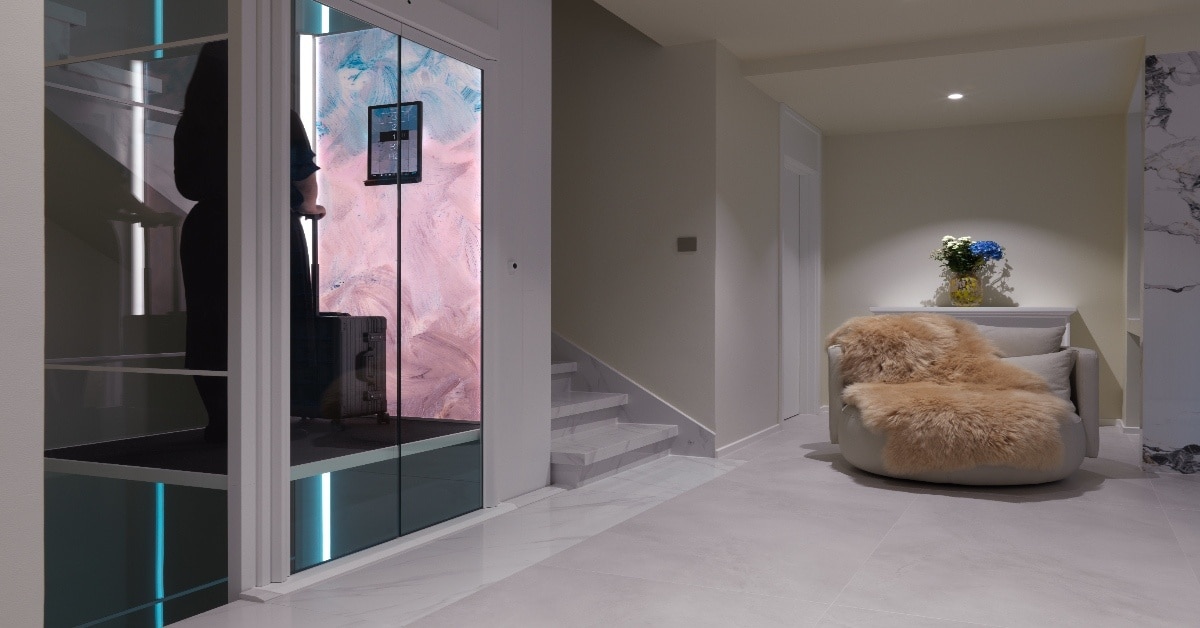
The SWIFT Pro is the flagship model and it raises the standard for what a residential home lift in the UK can look like. The cabin features interchangeable ArtWall interior panels in over 20 design themes, a dynamic touch screen control panel, programmable LED lighting, and a Scandinavian aesthetic that treats the lift as a piece of interior design rather than a utility device. For homeowners who have spent years and considerable money on the look and feel of their home, a product that enhances the space rather than compromising it is not a luxury. It is the appropriate standard.
The SWIFT Lite model brings the same core EcoDrive technology and SWIFT Safety architecture to a cleaner, more minimal finish at a more accessible price point. It is an excellent choice for installations where the primary objective is reliable, quiet, space-efficient mobility between two floors, with European engineering quality throughout.
Both models are designed to work within the constraints of existing UK homes. SWIFT provides end-to-end support from initial survey through to Building Control compliance and ongoing LOLER inspection, meaning every aspect of the installation is managed by people who understand UK regulatory requirements in full.
To find out which SWIFT model is right for your home and to request a free personalised consultation, visit swiftlifts.com/en.
FAQ
A through floor lift works by travelling vertically between two floors through an opening cut into the ceiling of the lower level and the floor of the level above. The user steps onto the platform or enters the enclosed cabin at ground floor level, operates the controls from a standing or seated position, and the lift rises through the aperture to deliver them to the upper floor. The opening at the upper level is sealed with a guard or gate when the lift is in use at the lower level, ensuring the floor remains safe for others. The drive mechanism is typically electric, using a screw and nut, traction cable, or battery-powered system depending on the brand. Modern through floor lifts require no separate machine room and can be installed with a minimal pit depth, making them suitable for standard UK terraced and semi-detached homes.
For most through floor lift installations in UK homes, full planning permission is not required. The works are internal, do not alter the external appearance of the building, and fall under permitted development rights for householders. However, listed buildings require listed building consent for any structural alterations including internal floor penetrations. Properties in conservation areas should check with the local planning authority if any external element is involved. Regardless of planning permission, Building Control approval is required for all through floor lift installations, covering structural safety, electrical compliance, and accessibility standards. The LOLER regulations also require a six-monthly inspection of the lift throughout its operational life. A professional installer such as SWIFT will manage the Building Control process on your behalf and advise from the outset whether your specific property requires any additional consents.


