
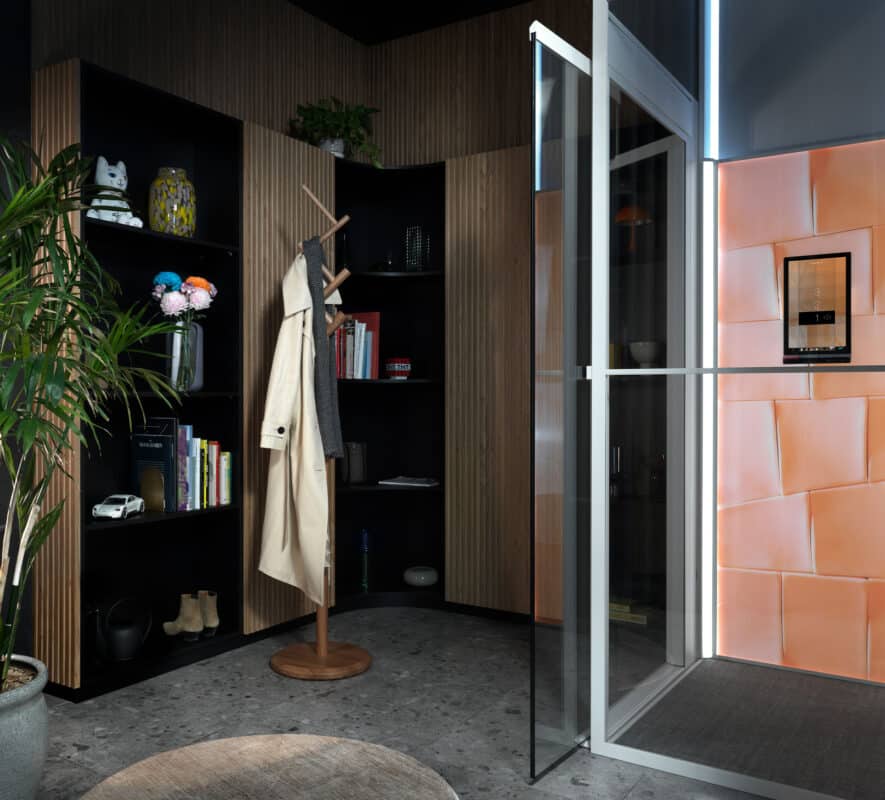
A Home elevator is an accessibility solution for elderly and disabled people with mobility impairment. It is also a fantastic lifestyle upgrade in multi-storey homes and luxury properties.
Installing a home elevator can sound like a daunting task, but a little research can help you select the best residential elevators Brisbane has to offer. This guide covers essential aspects like the type of lifts, installation cost, and safety regulations to help make the right choice based on user needs.
What is the Cost of Installing Home Elevators in Brisbane?
One of the most important considerations when planning for a home elevator installation is the budget. It is wise to have a rough estimate of the cost of the project beforehand to avoid any surprises ahead.
The price can be influenced by many aspects, like-
- Type of lift- the technology and mechanism
- Customizations, if any
- Add-on features
A standard home elevator in Brisbane can cost anywhere between $25,000 for a basic model and $60,000 for a premium model with bespoke customisation. Please note that these prices only include the price of the lift model, and not the added costs of customization, installation fees, or any structural changes to the property.
Additionally, there are other factors that can drive up the cost of the lift.
- Installation fees
- The travel height of the lift
- Number of floors covered
- Any structural changes, like changing electrical components or the floor plan, to accommodate the lift.
- The capacity and size of the lift
- Accessibility needs of the user
Space Consideration for Home Elevators in Brisbane
Space is a luxury in busy cities. To tackle space constraints, many lifts now come with compact designs that seamlessly integrate even into small spaces. There is no need for a separate room or complicated structural changes. Models that are 100% battery-driven are excellent solutions for properties with limited space.
There are still traditional lift models with heavy-duty machinery that require space for operation. They are suitable for spacious homes that also require more power and a more elaborate system.
Users can choose a model that can be accommodated in the available space.
The Lift Drive System- The Different Types of Home Elevators
There are four major types of lift systems based on their operation technology.
1. Screw and Nut Lift
A two stop lift starts at 44,850 AUD and can go up to 65,000 AUD. Battery-driven models, which are compact, quiet, and have a long-term economic efficiency, are one of the best residential elevators in Brisbane.
2. Hydraulic Lift
It works best for two or three-storey houses and needs a separate room for operation. It is a mid-range lift, typically priced between 20,000 and 50,000 AUD.
3. Pneumatic Lift
It is a type of domestic lift that uses air pressure to travel between floors and requires minimal building work. The cost range is 35,000 – 70,000 AUD.
4. Traction Lift
A more expensive model, it can cost anywhere between 42,000 – 54,000 AUD for a basic model, but it can go up to 100,000 AUD with customizations. More space is needed, and the maintenance is a bit higher, too.
Safety Compliance Mandatory for Home Elevators in Brisbane
All residential elevators in Brisbane, irrespective of type, should adhere to the industry safety and quality standards. The basic features that should be included in a lift are-
- Automatic rescue device (ARD)
- Emergency stop & alarm
- Phone or two-way communication
- Overload protection
- Interlocked doors
Apart from these, there are national safety regulations for all domestic elevators in Brisbane.
AS1735 Home Elevator Standards
The AS1735 lists all construction, safety, and performance-related guidelines for elevators.
DDA Compliance
The Australian Disability Discrimination Act of 1992 lists the standard lift requirements for disabled people. Key features include-
- Braille markings on buttons and within the easy reach of every user
- Handrails for support
- Adequate space to accommodate wheelchairs and other mobility aids.
- An emergency call option connected to a 24/7 support line.
- Clear display panels
- Voice announcer to indicate floors and other instructions.
BCA Standard Guidelines
The Building Code of Australia lists the safety guidelines for the structural and installation plans in a residential building, including lifts.
National Construction Code (NCC)
The NCC lists the standard practices for ensuring safety, accessibility, and proper installation. It has the guidelines for protection against hazards like fire or power failure.
QBCC
The local Brisbane elevator companies also need to adhere to the QBCC rules. The Queensland Building and Construction Commission sets rules for the proper licensing, installation, and inspection of residential development projects. The primary rules are-
- The contractor must hold an appropriate class QBCC license.
- It conducts an inspection and issues certification accordingly.
- It covers warranties and holds the power to settle disputes.
A lift service provider and installation company should strictly adhere to these safety regulations as they ensure a reliable domestic lift system with a secure passage for users.
To Sum Up
Every homeowner wants to choose the best residential elevators in Brisbane for their home. The right solution transforms not just the space, but your lifestyle too. So it is crucial to choose the right solution from a trusted service provider. It is a long-term investment, and it is important to understand the costs, lift types, space requirements, and associated compliance standards.
FAQ’s
In Brisbane, home elevator costs typically range from $20,000 to $70,000+, depending on the lift type, size, finishes, and installation complexity. Platform lifts are usually the most affordable, while hydraulic and vacuum elevators sit at the higher end. New builds cost less to install than retrofits, as structural allowances can be planned early and construction work is minimised.
The best home lift for Brisbane depends on the property and usage. Gearless traction (MRL) elevators suit new builds due to their efficiency and compact design. Platform lifts such as SWIFT are ideal for retrofits or when limited space. Hydraulic lifts are preferred for heavy use and long-term reliability in multi-level homes with frequent daily travel.
Yes, home elevators can increase property value in Brisbane by improving accessibility, functionality, and future-proofing. Buyers increasingly prioritise multi-generational living and aging-in-place features. A professionally installed, compliant residential elevator can make a property more attractive to a wider market, particularly in high-end homes, townhouses, and properties with multiple storeys or raised floor designs.
Installation time varies by lift type and project stage. For new builds, installation is typically completed within 1 to 2 weeks once construction is ready. Platform lifts may be installed in 3 to 5 days. Including design, approvals, and manufacturing, the full process usually takes 2-3 months from initial assessment to handover.
Most residential elevators require a shaft width between 900mm and 1500mm, along with overhead clearance of around 2300–2600mm. Pit depths range from zero for platform lifts to approximately 80–200mm for hydraulic or traction elevators. Space requirements vary by model, making early assessment essential, especially for existing homes or renovations.
Yes, modern home elevators are designed to operate safely in Queensland conditions, including high humidity and temperature fluctuations. Quality residential lifts include sealed components, corrosion-resistant materials, and backup power or automatic rescue systems. Choosing an elevator designed for Australian standards and serviced regularly by a local provider ensures reliable operation during storms, heat, and power interruptions.
Neither is universally better; the choice depends on usage and layout. Hydraulic lifts offer smooth operation and high load capacity, making them suitable for frequent use and multi-generational homes. Traction (MRL) lifts are more energy-efficient and ideal for modern Brisbane homes with limited space. A site assessment determines the most practical option. Screw and nut driven lifts are ideal for homes with limited space and when looking for something neat, fully glazed and that brings design to the home.
Installing a home elevator in Brisbane requires compliance with QBCC licensing, Australian Standards (AS 1735), and the National Construction Code (NCC). Depending on the project, building approval and engineering certification may be required. Reputable elevator companies manage approvals, inspections, and documentation to ensure the installation is legal, safe, and fully compliant.
A well-maintained domestic elevator typically lasts 20 to 30 years or longer. Lifespan depends on usage, environment, and servicing quality. Regular maintenance, timely part replacement, and professional servicing are critical to longevity. Choosing a reputable Brisbane supplier with readily available spare parts significantly extends the operational life and reliability of the elevator.
Yes, lifts can be installed in existing Brisbane homes. Retrofit-friendly options such as vacuum elevators and platform lifts require minimal structural changes. Hydraulic and traction lifts may need shaft construction and floor modifications. A professional site inspection determines feasibility, cost, and the most suitable lift type for the home’s layout and structure.


