

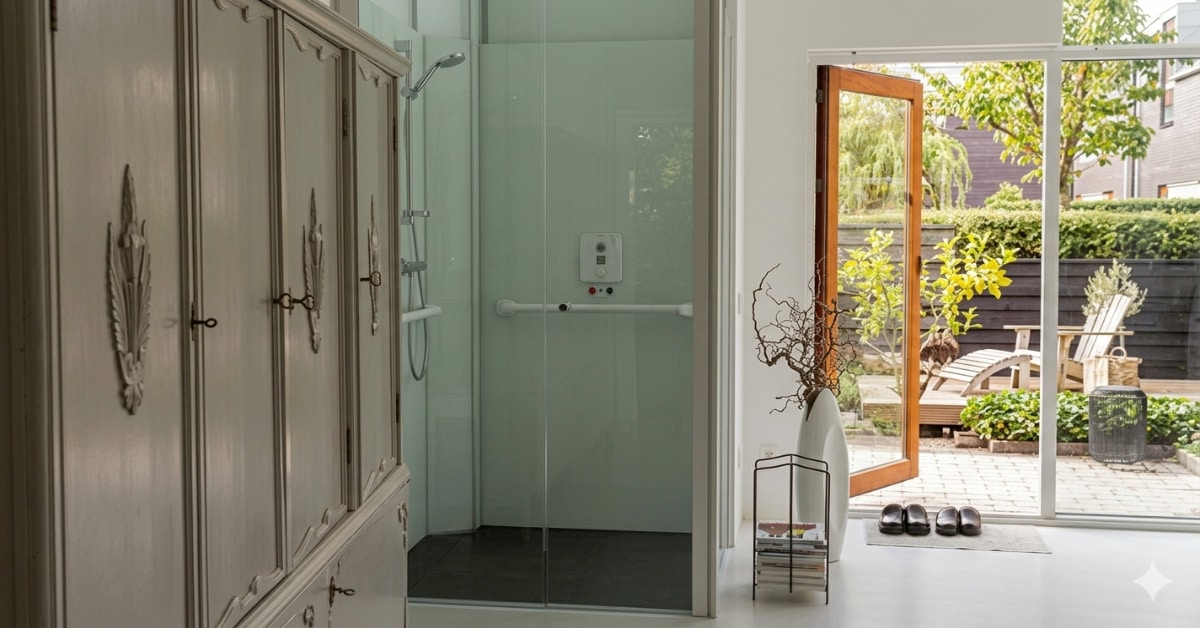
Luxury home lifts UK homeowners choose today are designed to deliver far more than convenient access between floors. They combine premium craftsmanship, advanced engineering, and elegant aesthetics to enhance both everyday living and long-term property value.
Whether you’re building a new luxury residence or upgrading an existing home, modern home lifts offer bespoke finishes, panoramic glass cabins, whisper-quiet operation, and seamless integration with contemporary interiors. While standard residential lifts focus primarily on accessibility, luxury models prioritise exceptional comfort, design, and smart technology without compromising safety or reliability. This guide explores the best luxury home lifts UK has to offer, including their features, installation requirements, costs, and the factors to consider before investing in a premium home elevator.
TL;DR (Too Long; Didn’t Read)
-
Who This Is For: Australian homeowners, carers, architects, and builders looking for clear answers on residential elevator safety during power outages.
-
Questions Answered:
-
Will I or my family members get trapped in a home lift during a blackout?
-
What safety systems kick in when mains electricity fails?
-
Are battery backups and emergency descent systems standard in Australia?
-
-
Our Solution & Value: We break down how modern residential lifts—like SWIFT—handle power cuts automatically, ensuring hands-free, safe rescue without technical intervention.
-
Why Trust This Guide: Grounded in Australian safety standards and European engineering principles, this guide cuts through marketing jargon to give you transparent, practical safety facts.
-
What You’ll Learn: A full breakdown of battery backup capabilities, emergency descent mechanisms, communication safety nets, and key questions to ask before buying a home lift.
What Makes A Home Lift “luxury” In The Uk Market?
In the UK, a “luxury” home lift isn’t defined by one single feature; it’s a combination of engineering, refinement, durability, and seamless integration into a high‑specification home.
A typical luxury home lift in the UK will usually include several of these characteristics:
- Quiet, smooth, hotel‑grade ride: The drive system is engineered to minimise noise, vibration, and jerkiness, so the lift feels like part of the home’s comfort system, not a noisy machine bolted on.
- Premium materials and finishes: Scrubbed stone or wood flooring, high‑quality aluminium or stainless‑steel cladding, custom glass panels, designer lighting, and bespoke cabin detailing that matches the home’s interior style.
- Design‑led integration: A lift that’s not just “in the house” but is a deliberate design element: glass‑walled shafts on stair landings, symmetrical symmetry with the staircase, and a cabin that feels like a sanctuary, not an industrial box.
- Advanced controls and smart features: Touchscreen or minimalist controls, smartphone integration, smart‑home联动, remote diagnostics, and sometimes voice operation.
- Enhanced safety and reliability: Higher‑spec components, longer warranties, and more robust safety systems (e.g., double‑redundant emergency lowering, battery backup with long‑cycle capability, and system monitoring).
- Higher usage tolerance: Engineered for dozens of daily trips, not just occasional use, making it practical for multi‑generational living or a busy household.
Are Luxury Home Lifts More Reliable Than Standard Ones?
Reliability is usually where the luxury vs. standard difference becomes most tangible over time.
How Reliability Is Engineered In
Luxury lifts are generally more reliable because they are built differently:
- Higher‑quality components: Motors, gearboxes, safety systems, and cabins are specified to last longer and handle more frequent use, often with extended warranties (e.g., 8–10 years on major drives, vs. 2–5 years on budget models).
- Better engineering and integration: In premium lifts, the entire system is designed as a single, harmonised unit, not just a cabin slapped onto a standard drive. This reduces the risk of vibration, misalignment, and premature wear.
- Redundant safety systems: Many luxury lifts have multiple safety layers (e.g., dual emergency lowering, comprehensive battery backup, remote monitoring) that keep the lift safe and operational even if a subsystem fails.
- Lower daily wear and tear: Quieter, smoother operation and higher‑quality seals and moving parts mean less friction and wear over thousands of trips.
What Users Actually Notice
Over 5–10 years, the difference tends to feel like:
- Noise and ride quality: A standard lift might feel “mechanical” and noisy, especially on older models; a luxury lift feels like it’s gliding, not crunching.
- Service call frequency: A well‑maintained standard lift is generally fine, but luxury lifts on comparable maintenance regimes are less likely to have unexpected breakdowns or need urgent repairs.
- Long‑term confidence: In a home where the lift is used many times a day (e.g., by a family, or a multi‑generational household), having a robust, high‑usage lift removes daily anxiety about reliability.
Do Luxury Lifts Add Value To Uk Properties?
Yes, luxury home lifts can add value to UK properties, but the amount depends strongly on the home’s type, price band, and target buyer.
In Luxury, New‑build And High‑spec Homes
In a contemporary townhouse, a large detached home, or a high‑end conversion, a well‑designed lift:
- Acts as a premium lifestyle feature that appeals to buyers who want a “forever home” with easy access across multiple floors.
- Helps future‑proof the property as population ages and demand for accessible living rises.
- Can contribute to a 10–15% premium on properties with lifts, especially in upper‑tier markets where buyers expect integrated, high‑quality features.
- Makes the home stand out in a competitive market, particularly in developments with 3+ floors where lifts are expected but not always present.
In More Standard Or Modest Homes
In a £500k–£800k family home, a luxury lift is less about straightforward capital gain and more about:
- Retaining value for a specific buyer group: It keeps the home attractive to buyers who might otherwise rule out a two‑storey house (e.g., older couples, families with elderly relatives).
- Avoiding the cost of renovation later: Installing a lift at the point of building or major renovation is far cheaper than retrofitting it years later.
- Adding a “statement” feature that justifies the price: In clustered streets, a properly integrated lift can be the single thing that makes the home feel more special and more finished.
Is Maintenance Higher For Premium Home Lifts?
Not significantly in terms of running cost, but often better in terms of outcome.
Typical Uk Maintenance Costs
- Standard lifts: Annual maintenance contracts generally cost £300–£700 per year, covering basic inspections, lubrication, and minor adjustments.
- Luxury lifts: Contracts are often in the same range but may include more detailed checks, remote diagnostics, and faster response times, especially if the lift is used heavily.
Where The Real Difference Lies
- Preventive vs. reactive maintenance: Luxury lifts are often designed so that issues are easier to spot and fix proactively, reducing the risk of expensive, unexpected failures.
- Parts and service support: Premium brands typically have better‑supported parts availability and specialist engineers, which can mean quicker repairs and fewer long‑downtime events.
- Long‑term cost of ownership: A luxury lift may cost more up front, but over 15–20 years, the combination of lower running noise, higher reliability, and better parts support can make it feel like better value, especially in a home where the lift is used frequently.
Who should actually consider a luxury home lift?
A luxury lift is not for every home or every budget. It starts making sense when multiple factors align.
Strong Candidates For A Luxury Lift
- Homeowners planning to stay 15+ years: If the intention is to live in the home for the long term, investing in a quiet, reliable, high‑quality lift is a rational choice — it’s a comfort and safety upgrade that pays off over time.
- Homes with high usage: A household with multiple adults, frequent visitors, and a need to move between floors many times a day (e.g., carrying groceries, children, guests) benefits greatly from a lift that’s smooth, quiet, and abuse‑resistant.
- Luxury, new‑build, or high‑specification properties: In a £1M+ home, a poorly engineered lift feels out of place. A luxury lift integrates properly with the finishes, design, and overall quality of the home.
- Families where mobility is a genuine concern: If one or more family members have limited mobility, a high‑reliability, aesthetically pleasing lift supports both safety and dignity over decades.
- Developers and speculators: For a new build or major renovation, a well‑designed luxury lift is a strong selling point that can justify a higher price and help future‑proof the property.
When A Luxury Lift Is Overkill
- In a modest‑value home where the lift is only needed for occasional use by one person.
- In a home that is likely to be sold in 5–10 years, unless the lift is clearly part of a high‑spec package for a specific buyer group.
- In a project where the rest of the home is standard, not luxury — a glass‑walled lift can feel like a mismatched statement.
When Premium Engineering Like Swift Becomes The Rational Choice
A lift like SWIFT (for example) stands out in the “luxury” segment not because of pure finishes, but because of the underlying engineering choices that matter for real‑life use in UK homes:
- Battery‑driven technology that is inherently quiet, efficient, and capable of running independently during power cuts, which is a practical advantage in British homes where outages are a real consideration.
- Space‑optimal design that allows a premium lift to fit into smaller townhouses and terraced homes, not just mansion-sized properties, making luxury more accessible.
- Designed for long‑term use with extended warranties (e.g., 10‑year drive warranty) and a system that’s less about “show” and more about consistent, low‑noise, daily comfort over 15–20 years.
Practical Questions To Decide If A Luxury Home Lift Is Right For Your Uk Home
Use these questions to move from aspiration to a clear decision:
- How many people, and how many times a day, will use the lift?
If it’s just one person, once a day, a standard lift is usually enough. If multiple people are using it constantly, a luxury lift may be the only way to ensure comfort and reliability. - How long do you expect to stay in the home?
If you’re planning to leave in 5–10 years, a very high‑spec lift is harder to justify. If 15+ years is the plan, investing in a premium model is more rational. - What is the rest of the home’s specification?
If the house is already high‑spec (designer kitchen, high‑end bathrooms, smart home systems), a premium lift integrates naturally. If the rest is modest, a luxury lift can feel like a mismatch. - What is your budget for the entire project, including building works, electrics, and finishes?
Be honest about the total cost, not just the lift’s price tag. Luxury lifts are only worth it if the rest of the home supports that level of investment. - Who is the lift for – and who will it be for in 10–15 years?
If the main user is elderly or mobility‑limited, long‑term reliability and safety become more important than pure aesthetics.
Answering these honestly will help you decide whether a luxury home lift is a sensible upgrade or an expensive status symbol.
Frequently Ask Questions
1. What makes a home lift “luxury” in the UK market?
Lorem ipsum dolor sit amet, consectetuer adipiscing elit, sed diam nonummy nibh euismod tincidunt ut laoreet dolore magna aliquam erat volutpat.
A luxury home lift in the UK is distinguished by quiet, smooth operation; high‑quality finishes and materials; seamless design integration (e.g., glass walls, custom cladding); advanced controls and smart features; and enhanced engineering for reliability and long‑term use, not just basic lifts with cosmetic upgrades.
2. Are luxury home lifts more reliable than standard ones?
Yes, luxury home lifts are generally more reliable because they use higher‑quality components, more robust engineering, redundant safety systems, and are designed for higher usage, resulting in fewer breakdowns and less downtime over 10–20 years compared to standard models.
3. Do luxury lifts add value to UK properties?
Yes, luxury lifts can add value, especially in high‑spec and new‑build homes, where they appeal to buyers seeking a “forever home” with easy access and premium features. In some cases, they can contribute to a 10–15% price premium, but the real value is also in future‑proofing and long‑term usability.
4. Is maintenance higher for premium home lifts?
Annual maintenance costs are usually similar between standard and luxury lifts (typically £200–£500/year in the UK), but luxury lifts often come with more comprehensive checks, remote monitoring, and better parts support, leading to better long‑term reliability and fewer unexpected repair bills.
5. Who should actually consider a luxury home lift?
Luxury home lifts are best suited to homeowners planning to stay long term (15+ years), households with high usage, luxury or new‑build properties, and homes where mobility is a genuine concern. They are less justified in modest homes where the lift is only needed occasionally or for a short ownership period.


